

How much you should charge for pet sitting depends on your service type, local market, and real business costs. Professional pet sitters in the U.S. earned an average gross revenue of $112,423 in 2025, though solo operators typically start in the $30,000–$50,000 range. That gap exists because most new sitters price by gut feel rather than by cost and market data. Get the math right from day one, and you build a business. Get it wrong, and you build a very expensive hobby.
How much should I charge for pet sitting?
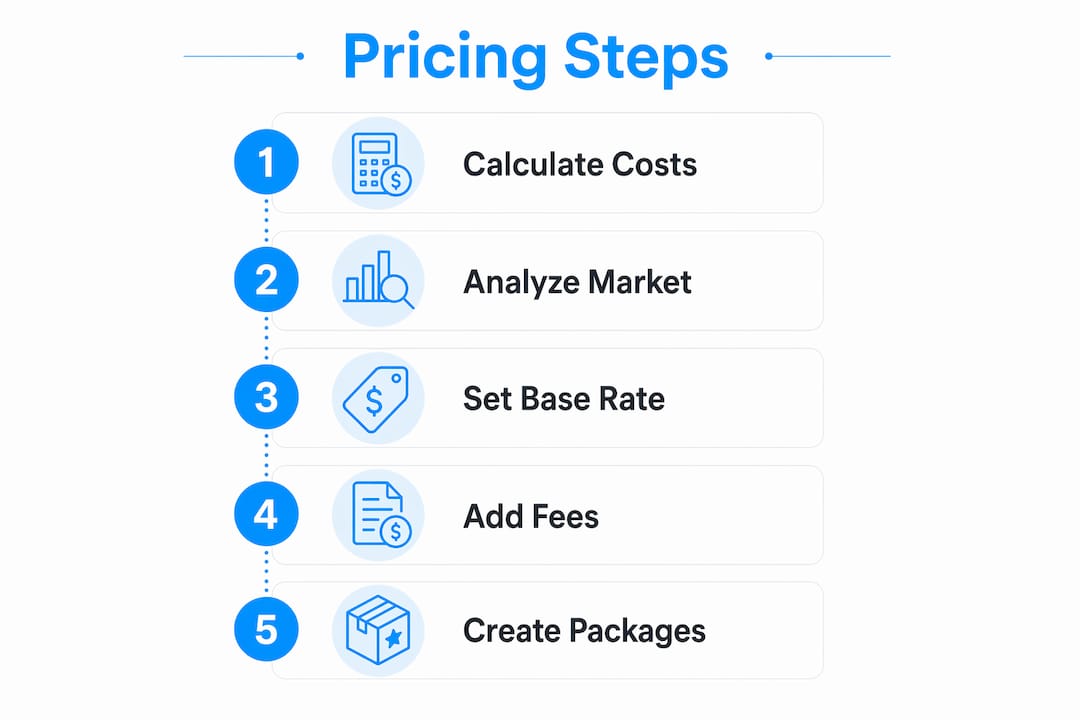
The industry term for what you’re setting is your “service rate structure,” and it covers base fees, add-ons, and surcharges. Professional pet sitters price drop-in visits at $22–$45, overnight stays at $55–$150, and standard 30-minute walks in the $20–$35 range. These are not arbitrary numbers. They reflect real costs: your time, your liability exposure, your supplies, and the local demand in your market.
Your local market sets the floor and ceiling for what clients will pay. A sitter in Manhattan can charge significantly more than one in rural Ohio, simply because the cost of living and client expectations differ. Research what other professional services charge in your ZIP code before setting a single rate.

Your business costs set your minimum viable price. General liability insurance and animal bailee coverage run $250–$500 per year. Add licensing fees, pet first aid certification, supplies, and software, and your overhead adds up fast. If your rates don’t cover those costs plus your time, you are paying to work.
What factors should you consider when setting your pet sitting rates?
Several variables directly affect what you should charge. Work through each one before publishing a price list.
- Local market rates. Search for pet sitting services in your area and note the range. Your rates should sit within that range, adjusted for your experience and credentials.
- Time per service. A 20-minute drop-in and a 60-minute visit are not the same product. Price them differently.
- Number of pets. Charge an additional $5–$15 per extra pet to reflect the added time and responsibility.
- Specialized care. Medication administration, diabetic pet care, and post-surgical monitoring all justify higher fees. These services carry real risk and require skill.
- Platform fees. Booking platforms take 20–40% of your revenue in commissions. That means a $30 visit nets you $18–$24. Factor that into your listed rate or plan to move clients to direct billing.
- Holiday and last-minute surcharges. Charging 25–50% above base rates during Thanksgiving, Christmas, and New Year’s is standard practice. Clients expect it when you communicate it clearly.
Pro Tip: Build a simple monthly cost spreadsheet before you set rates. List insurance, software, fuel, and supplies. Divide by the number of visits you can realistically complete. That number is your break-even rate per visit. Price above it.
Understanding your business budget fundamentals is the single most effective way to price with confidence rather than anxiety.
How to structure your pet sitting pricing: base rates, add-ons, and packages
Clear pricing structure does two things: it protects your income and it builds client trust. Clients who understand exactly what they are paying for are far less likely to push back on rates.
| Service | Base Rate | Common Add-Ons |
|---|---|---|
| Drop-in visit (30 min) | $22–$35 | Extra pet: +$5–$15 |
| Extended visit (60 min) | $35–$45 | Medication: +$5–$10 |
| Dog walk (30 min) | $20–$35 | Last-minute booking: +$10–$20 |
| Overnight stay | $55–$150 | Holiday premium: +25–50% |
| Pet taxi/transport | $15–$30 per trip | Multiple stops: negotiated |
Start with a base rate for your most common service. Then build add-on fees for every variable that increases your time or risk. A client with three dogs who needs insulin injections twice daily is not a standard drop-in client. Price accordingly.
Bundling works well for recurring clients. A five-visit weekly package at a slight discount locks in predictable income and reduces the cost of client acquisition. Recurring revenue structures stabilize your monthly cash flow and make your business easier to plan around.
Contracts matter more than most new sitters realize. A written agreement that spells out your rates, cancellation policy, holiday fees, and add-on charges protects you legally and sets professional expectations. Clients who sign a contract are far less likely to dispute a charge.
Pro Tip: List your holiday premium policy in your welcome packet and again when you confirm holiday bookings. Clients who see it twice never claim surprise. Many pet sitters earn 25–35% of their annual income during the november-to-january window. Protect that income with clear communication.
What are common mistakes and how do you avoid undervaluing your services?
Underpricing is the most common and most damaging mistake new pet sitters make. It is not a conservative strategy. It is a path to burnout and business failure.
The core problem is mindset. New sitters often treat pet sitting as a hobby rather than a professional service business. That mindset produces hobby-level rates, which attract price-sensitive clients who do not value professional care. Those clients are the hardest to retain and the quickest to leave a bad review.
- Skipping insurance. Operating without general liability and animal bailee coverage is the fastest way to lose everything. One incident with an injured or lost pet can cost more than a year of revenue.
- Discounting to compete. Lowering your rates to match the cheapest sitter in town signals low quality, not good value. Compete on trust, credentials, and communication instead.
- Ignoring platform fees. If you list at $30 and the platform takes 30%, you net $21. That may not cover your costs. Always calculate your net rate, not your listed rate.
- No cancellation policy. Last-minute cancellations cost you real money. Charge a fee for cancellations within 24–48 hours of a scheduled visit.
“Treating your pet sitting business like a business from day one is what separates sitters who thrive from those who quit within two years. Professional insurance, clear contracts, and market-based pricing are not optional extras. They are the foundation.”
The tips for profitable pricing that Thedoggurus shares consistently point to one truth: your rates must reflect your value, not your fear of losing a client.
How can you grow your pet sitting income beyond solo operations?
Solo pet sitting has a ceiling. A single sitter can only handle so many visits per day before time runs out. That ceiling sits around $70,000–$110,000 in annual gross revenue for most operators. Crossing it requires a structural change, not just more bookings.
- Move clients to direct billing. Transitioning away from platforms to direct invoicing increases your effective income by 25–67% by eliminating commission fees. Use platforms to find new clients, then build direct relationships.
- Raise rates as you gain experience. Every certification, every year of experience, and every glowing review justifies a rate increase. Review your pricing at least once per year.
- Add specialty services. Services like enrichment activities, basic training reinforcement, and senior pet care command higher rates. Thedoggurus covers how enrichment services add real revenue without major overhead.
- Hire and build a team. Team-based agencies earn $120,000–$350,000 in gross revenue annually. Profit margins narrow due to labor costs, but total income grows substantially. Hiring requires systems, training, and clear service standards.
- Diversify your service menu. Adding dog training, grooming referrals, or pet taxi services creates new revenue streams from your existing client base.
Scaling beyond solo operations is a business decision, not just a growth goal. It requires planning, pricing adjustments, and the right support structure to execute well.
Key Takeaways
Setting profitable pet sitting rates requires knowing your costs, your market, and your service structure before you publish a single price.
| Point | Details |
|---|---|
| Base rates by service type | Drop-ins run $22–$45; overnights run $55–$150; price each service separately. |
| Add-ons protect your margin | Charge $5–$15 per extra pet and more for medication or specialized care. |
| Holiday premiums are standard | A 25–50% surcharge during peak holidays is expected and accepted by clients. |
| Direct billing beats platforms | Moving off platforms increases your net income by 25–67% per visit. |
| Scaling requires a team | Solo income caps near $110K; a team model can reach $120K–$350K gross. |
Why I think most pet sitters price backwards
Most pet sitters I talk to start with what they think clients will pay and work backward. That is the wrong direction entirely. You should start with what it costs you to deliver the service professionally, add a fair profit margin, and then check whether the market supports that number.
The market almost always does. Clients who want professional, insured, reliable care are not shopping for the cheapest option. They are shopping for the sitter they can trust with their pet and their home. That sitter commands a premium, and rightfully so.
I have seen sitters raise their rates by 20% and lose two clients while gaining five better ones. The clients who leave over a price increase were never going to be your best clients anyway. The ones who stay and the ones who find you after the increase are exactly who you want to build a business around.
Seasonal pricing is another area where sitters leave real money on the table. The holiday window from november through january is your highest-demand period. If you are not charging a premium during that window, you are subsidizing your clients’ holiday travel. Charge the premium. Communicate it clearly. Your best clients will not flinch.
The business side of pet sitting is learnable. Pricing, contracts, insurance, and scaling are all skills you can build. The sitters who treat them seriously are the ones still running profitable businesses five years from now.
— Oliver
How Thedoggurus supports your pet sitting pricing strategy
Pricing your services well is one of the highest-leverage decisions you will make as a pet care professional. Thedoggurus was built by people who have run pet care businesses, so the guidance here is grounded in what actually works in the real market.

The Thedoggurus pricing resources give you a clear framework for setting rates, structuring add-ons, and planning for seasonal demand. If you are building or expanding a team, the staff products and training tools help you maintain service quality as you scale. Whether you are just starting out or ready to move beyond solo operations, Thedoggurus gives you the tools and expert guidance to price with confidence and grow with purpose.
FAQ
What is the average pet sitting rate in the U.S.?
Professional pet sitters charge $22–$45 for drop-in visits and $55–$150 for overnight stays. Rates vary by location, experience, and service type.
How much can a pet sitting business make per month?
Solo operators typically earn $2,500–$4,200 per month, while team-based agencies can gross significantly more. Annual gross revenue for professional sitters averaged $112,423 in 2025.
Should I charge extra for holidays?
Yes. A 25–50% holiday surcharge above your base rate is standard industry practice. Communicate it clearly in your contract and booking confirmation to avoid disputes.
How do platform fees affect my pet sitting income?
Booking platforms take 20–40% of each transaction. A $30 visit nets you as little as $18 after fees. Moving established clients to direct billing recovers that margin and increases your effective hourly rate.
Is a pet sitting business profitable?
Yes, when priced and managed as a real business. Sitters who carry proper insurance, use written contracts, and charge market-rate fees consistently build profitable operations. Those who treat it as a side gig rarely reach sustainable income levels.