

Training for pet grooming is the process of gaining hands-on skills and technical knowledge through grooming schools, salon apprenticeships, or a combination of both, often validated by professional certifications. No US state or federal license is currently required to work as a pet groomer, but formal training reduces liability risks from bite injuries and accidental harm. The National Dog Groomers Association of America (NDGAA) and its National Certified Master Groomer (NCMG) credential are the most recognized standards in the industry. Whether you are just starting out or looking to sharpen your skills, understanding your training options is the first step toward a confident, profitable career.
What are the main training paths for pet groomers?
Three primary paths exist for training for pet groomers: grooming school, salon apprenticeships, and hybrid programs that blend both. Each path has real trade-offs in cost, time, and depth of preparation.
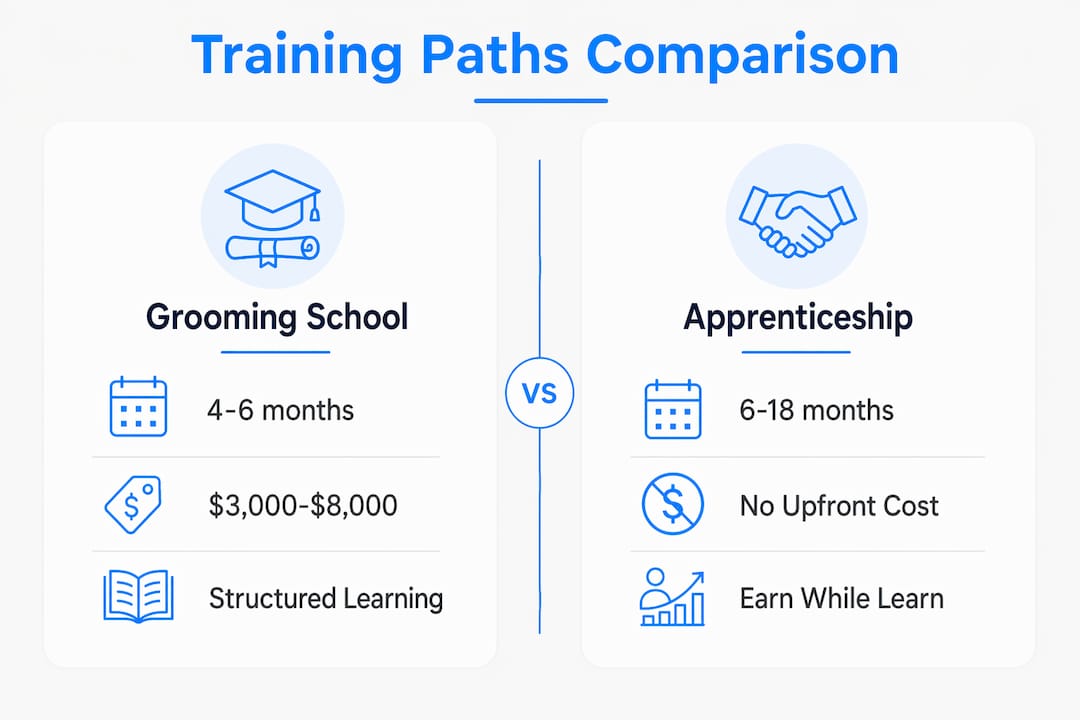
Grooming school gives you structured, classroom-based learning with hands-on lab time. Tuition typically runs $3,000–$8,000, and most programs take 4–6 months to complete. You graduate with documented hours, breed knowledge, and a foundation in safety protocols. The cost is real, but the structure accelerates your learning curve significantly.
Salon apprenticeships cost nothing upfront and let you earn while you learn. The trade-off is time. Apprenticeships last 6–18 months and quality depends entirely on your mentor. A weak mentor produces a weak groomer. A certified, competition-active mentor produces someone ready to compete on day one.
Hybrid programs combine formal classroom theory with real salon experience. Hybrid methods provide the best career preparation because they close the gap between knowing and doing. You understand why a technique works and you practice it under real conditions.
| Training path | Duration | Cost | Best for |
|---|---|---|---|
| Grooming school | 4–6 months | $3,000–$8,000 | Structured learners, career changers |
| Salon apprenticeship | 6–18 months | Free (earn income) | Budget-focused, hands-on learners |
| Hybrid program | 6–12 months | Varies | Those wanting depth and speed |
Pro Tip: If budget is tight, start with an apprenticeship under a certified groomer, then invest in a short formal course once you are earning. You get income now and credentials later.
What core skills does pet grooming training cover?
Professional grooming curricula build both technical skills and animal care judgment. Programs range from 150 to 600 hands-on hours, with advanced diplomas including business training on top of grooming technique. More hours mean more breed exposure, and breed exposure is what builds real confidence.
The core skills you develop through dog grooming training include:
- Bathing and drying: Correct water temperature, shampoo selection for coat type, and safe use of high-velocity dryers without stressing the animal.
- Brushing and dematting: Identifying coat condition before grooming and removing mats without causing pain or skin damage.
- Nail and ear care: Trimming nails to the correct length without hitting the quick, and cleaning ears safely to prevent infection.
- Clipping and scissoring: Breed-specific cuts using both electric clippers and hand scissors, including pattern work for show-style trims.
- Safe animal handling: Restraint techniques that keep both the groomer and the pet safe, especially for anxious or reactive dogs.
- Anatomy and skin health: Recognizing lumps, skin conditions, and coat abnormalities that should be flagged to the pet owner or a vet.
Breed-specific knowledge is where many beginners underestimate the learning curve. A Poodle, a Bichon Frise, and a Golden Retriever each require completely different grooming approaches. Training programs that expose you to a wide variety of breeds build the pattern recognition you need to work confidently on any dog that walks through the door.
Animal welfare sits at the center of every good grooming program. A groomer who prioritizes speed over safety will eventually cause harm. The best training teaches you to read a dog’s stress signals and adjust your approach before a situation escalates.
How can certification boost your grooming career?
Certification is voluntary in the United States, but it is one of the most effective ways to signal expertise to clients and employers. Certified groomers can charge 15–30% more than uncertified peers. That premium compounds quickly when you are running a full book of clients.
The NDGAA offers two primary credentials. The Certified Professional Groomer (CPG) is the entry point, and the National Certified Master Groomer (NCMG) is the advanced tier. Both require passing written and practical exams. Exam fees range from $60 to $125 per test, making certification one of the most affordable professional investments you can make. The International Professional Groomers (IPG) organization offers an alternative certification path for groomers who prefer a different exam structure.
| Certification | Issuing body | Exam type | Fee range | Key benefit |
|---|---|---|---|---|
| Certified Professional Groomer (CPG) | NDGAA | Written + practical | $60–$125 | Industry recognition, higher rates |
| National Certified Master Groomer (NCMG) | NDGAA | Written + practical | $60–$125 | Advanced credential, premium pricing |
| IPG Certification | IPG | Written + practical | Varies | Alternative credentialing path |
Beyond pricing power, certification reduces your insurance premiums and builds client trust faster than any marketing campaign. Pursuing certification after 12 months of active grooming gives you enough practical experience to pass the practical exam with confidence.
Pro Tip: Do not sit for your certification exam in your first month. Build 12 months of real grooming volume first. You will pass more easily and the credential will mean more because you have the experience to back it up.
Practical tips for aspiring groomers entering the field
The biggest variable in your early career is not which school you attend. It is how much you groom and who teaches you. Mentor quality determines the ceiling of an apprenticeship. A mentor who actively competes in grooming events stays current with modern techniques and breed standards. That currency transfers directly to you.
Speed and physical endurance come only from high-volume practice. Grooming is physically demanding. You stand for hours, work with anxious animals, and use tools that require precision under pressure. Beginners who groom a wide variety of breeds and temperaments build the stamina and adaptability that separate working professionals from hobbyists.
Here are the practical steps that accelerate your growth:
- Choose certified mentors. An apprenticeship under a groomer who holds an active NDGAA or IPG credential gives you access to verified, current standards.
- Track your hours. Document every breed you groom and every technique you practice. This record supports your certification application and shows employers your depth.
- Build a portfolio. Before-and-after photos of your work are your most persuasive marketing tool. Start building this from day one.
- Practice on difficult dogs. Anxious, reactive, or matted dogs teach you more than easy ones. Seek out the hard cases early.
- Invest in continuing education. Pet grooming courses, trade shows like Groom Expo, and breed-specific workshops keep your skills sharp after you graduate.
The physical demands of grooming are real and often underestimated. Repetitive strain injuries are common among groomers who do not use proper body mechanics. Good training programs address ergonomics directly. If yours does not, seek out that information independently.
Key Takeaways
Formal training combined with certification gives aspiring pet groomers the fastest path to a confident, profitable career.
| Point | Details |
|---|---|
| Three training paths exist | Grooming school, salon apprenticeships, and hybrid programs each offer different cost and time trade-offs. |
| Core skills span technical and animal care | Training covers bathing, clipping, nail care, breed-specific techniques, and safe animal handling. |
| Certification pays for itself | NDGAA and IPG credentials let certified groomers charge 15–30% more than uncertified peers. |
| Mentor quality matters most in apprenticeships | Choose mentors who hold active certifications and compete in grooming events for the best preparation. |
| Speed comes from volume | Grooming varied breeds daily builds the stamina and confidence required for professional success. |
Why the hybrid path is the one I always recommend
The debate between grooming school and apprenticeships misses the real point. Neither path alone produces a fully prepared groomer. School gives you the “why” behind every technique, but it cannot replicate the pressure of a real client standing at the front desk. An apprenticeship gives you volume, but without structured theory, you can spend years practicing bad habits without knowing it.
The groomers I have seen build the strongest careers started with formal education to get the foundation right, then moved into a salon environment to build speed and client-handling skills. They did not wait until they felt “ready” to pursue certification. They sat for their NDGAA exam around the 12-month mark, used the preparation process to identify gaps in their knowledge, and came out the other side with both confidence and credentials.
One thing most training guides do not tell you: the practical exam for NCMG is genuinely difficult. Groomers who pass it on the first attempt are almost always the ones who groomed a high volume of varied breeds before attempting it. The exam rewards real experience, not just study time.
Portfolio building is the other habit that separates groomers who grow quickly from those who plateau. Every dog you groom is a marketing asset. Document it. Clients who see a portfolio of clean, breed-correct work before they book are far more likely to become regulars and refer their friends.
If you are serious about this career, treat your training like a business investment from day one. Track your hours, choose your mentors carefully, and pursue certification at the right time. The pet care industry rewards groomers who combine skill with professionalism.
— Oliver
Build your grooming career with Thedoggurus
Starting a career in pet grooming takes more than good technique. You need the right guidance, the right resources, and a community that understands the business side of pet care.

Thedoggurus brings together expert-led content, hands-on coaching, and practical business tools built specifically for pet care professionals. Whether you are choosing your first grooming training program or preparing to launch your own grooming business, Thedoggurus gives you the foundation to grow with confidence. Explore the platform and connect with industry experts who have built and run pet care businesses themselves.
FAQ
Is a license required to become a pet groomer in the US?
No US state or federal license is currently required to work as a pet groomer. Professional training and certification are voluntary but significantly reduce liability risks.
How long does training for pet groomers take?
Grooming school programs typically take 4–6 months, while salon apprenticeships run 6–18 months. Hybrid programs generally fall in the 6–12 month range.
What is the NCMG certification?
The National Certified Master Groomer (NCMG) is an advanced credential issued by the NDGAA. It requires passing both written and practical exams and is one of the most respected credentials in the US grooming industry.
How much do pet grooming courses cost?
Grooming school tuition ranges from $3,000 to $8,000 for programs offering 150 or more hands-on hours. Salon apprenticeships are typically unpaid but cost-free to the student.
When should I pursue grooming certification?
Most experienced groomers recommend sitting for certification after at least 12 months of active grooming. That volume of practice gives you the best chance of passing the practical exam on your first attempt.