

Yes, your pet business can survive a crisis. The owners who come out ahead share one habit: they act on safety and communication before anything else. Whether you’re facing a hurricane, a power outage, a staffing collapse, or a reputational incident, the first 24 hours determine whether you recover in days or months.
Here’s what to do right now if you’re in the middle of an incident:
- Secure every animal in your care. Confirm all pets are safe, accounted for, and in a stable environment before you do anything else.
- Verify staff safety. Account for every team member on-site and off-site.
- Designate one incident lead. One person makes decisions and speaks publicly. Everyone else executes.
- Protect your cash position. Pause non-essential spending, identify your reserve balance, and flag any prepaid client packages that may need refunds.
- Triage critical supplies. Confirm you have at least 72 hours of food, medications, and bedding on hand.
Pro Tip: Print this checklist and post it in your office, break room, and back-of-house area now, before anything goes wrong. The worst time to find a plan is during an incident.
If you follow these five steps in the first 24 hours, you protect the animals in your care, preserve client trust, and give yourself a stable foundation to begin recovery. That’s the best pet business crisis response you can build, and everything below shows you exactly how to build it.
Key Takeaways
The best pet business crisis response combines immediate animal safety, honest client communication, and a written BCDR plan your team has actually practiced.
| Point | Details |
|---|---|
| Safety comes first, always | Secure every animal and account for all staff before any other crisis action. |
| One spokesperson, one message | Designate a single communications lead before an incident to prevent conflicting public statements. |
| Build an appropriate cash reserve to cover a moderate operating expense buffer | A rolling reserve covering 6–8 weeks of operating expenses is the recommended buffer for pet businesses. |
| Written plans beat improvisation | A BCDR plan with tested procedures and assigned roles dramatically shortens recovery time. |
| Thedoggurus accelerates readiness | Staff training modules, BCDR templates, and coaching from Thedoggurus give your team a practiced, structured crisis response. |
Table of Contents
- Why the pet industry often weathers recessions better than most
- What types of crises hit pet businesses hardest?
- What should you do in the first 24 hours of a crisis?
- How do you build a BCDR plan for a pet care business?
- What operational systems should you harden before a crisis hits?
- How should you communicate during a crisis to protect client trust?
- How do you handle insurance claims and cashflow after a crisis?
- Real-world scenarios and the checklists that help you recover
- Why animal safety and client trust are the only two things that matter in a crisis
- Thedoggurus gives pet care businesses a crisis-ready foundation
- Sources
Why the pet industry often weathers recessions better than most
The pet sector has a track record that most industries envy. Market analysis shows that service segments, including boarding, daycare, grooming, and veterinary care, tend to outperform discretionary retail during economic downturns. Pet owners treat their animals as family members, and spending on their care is among the last categories they cut.
That resilience has a direct implication for how you plan: invest in reliability and trust, not discounting. Clients who trust your facility will stay through a rough patch. Clients who chose you because you were cheapest will leave the moment a competitor drops prices further. Industry leaders consistently recommend avoiding aggressive cost-cutting that erodes service quality, and instead applying targeted savings while running small, measurable experiments to grow revenue.
The pet industry’s recession resilience is real, but it is not automatic. It flows from the trust pet owners place in specific providers. Lose that trust during a crisis, and the sector’s resilience does nothing for your individual business.
Pro Tip: Services hold demand better than retail during downturns. If you sell retail products alongside services, protect your service quality first. Retail margins can be adjusted; a client who pulls their dog from your daycare rarely comes back.
Key factors that support the pet sector’s resilience:
- Emotional attachment drives spending decisions more than price sensitivity for most pet owners.
- Service stickiness means clients who find a trusted groomer, boarder, or trainer rarely switch without a strong reason.
- Recurring revenue from boarding, daycare, and grooming creates predictable cash flow that helps owners weather short disruptions.
- Vet care and medications are largely non-discretionary, anchoring the sector even in deep recessions.
What types of crises hit pet businesses hardest?
Not every crisis carries the same risk profile. Some threaten animal safety immediately. Others erode trust slowly. A few can destroy cash flow before you realize what’s happening. Knowing which category you’re facing helps you triage your response.
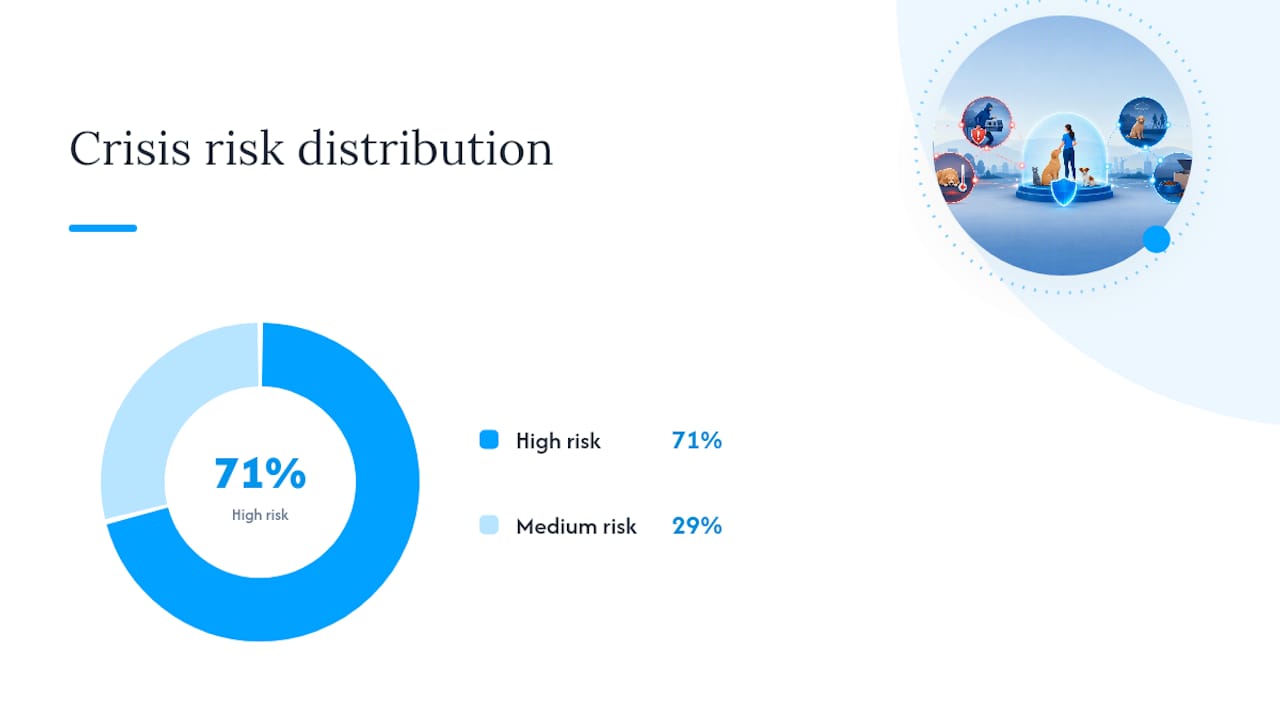
- Storms and flooding (Risk: High) — Facility damage, evacuation pressure, and potential animal injury or loss. Reputational and legal exposure is severe if animals are harmed.
- Power outages (Risk: High) — Climate control failure in kennels and boarding spaces can become life-threatening within hours, especially in summer. Facilities without backup power face immediate safety risk and operational shutdown.
- Supply-chain delays (Risk: Medium) — Food, medications, and bedding shortages force substitutions that may not suit every animal. Advance inventory buffers are the primary mitigation.
- Staffing shortages (Risk: High) — A sudden absence of key staff, whether from illness, resignation, or a local emergency, can force you to reduce capacity or close entirely.
- Tech failures (Risk: Medium) — Booking system outages, payment processor failures, or lost client records create operational chaos and client frustration.
- Animal-welfare incidents (Risk: High) — An injury, illness, or death in your care triggers immediate safety, legal, and reputational consequences simultaneously.
- Fire or theft (Risk: High) — Facility damage, animal safety risk, and insurance claims all run in parallel, stretching your team and your attention at the worst possible time.
Crisis escalation rarely comes from the incident itself. It comes from slow communication. A power outage that lasts four hours is manageable. A power outage where clients find out from a neighbor’s social media post, not from you, becomes a trust crisis that outlasts the outage by months.
Consider a boarding facility that lost power during a summer storm. The generator failed to start because the transfer switch had never been tested. Within two hours, kennel temperatures climbed past 90°F. The owner called clients, but only after local news covered the story. The outage was the trigger. The communication gap was the actual crisis.
What should you do in the first 24 hours of a crisis?
Speed and order matter here. Work through these steps in sequence, not in parallel.
- Secure all animals (Hour 0–1). Physically confirm every pet is safe, accounted for, and in a stable environment. Move animals away from any hazard zone immediately.
- Account for all staff (Hour 0–1). Confirm who is on-site, who is en route, and who is unreachable. Do not leave animals unattended to locate staff.
- Contact your emergency vet (Hour 1–2). Notify your veterinary partner of the situation, even if no animals are injured yet. They need lead time to prepare.
- Activate your incident lead (Hour 1–2). One person takes command of decisions and communications. Everyone else executes assigned tasks.
- Notify clients with a factual, brief message (Hour 2–4). Send one message. Keep it short, honest, and focused on what you know.
- Document everything (Hour 0–24). Record times, actions, contacts, and photos continuously. This protects you for insurance claims and client conversations.
- Assess and stabilize operations (Hour 4–8). Identify what is working, what is broken, and what you need in the next 24 hours.
- Brief your team on roles and next steps (Hour 8–24). Confirm who is responsible for what through the recovery period.
Staff roles by time window:
- Hour 0–2 (Incident Lead): Assess safety, activate emergency contacts, issue first client notification.
- Hour 0–2 (Operations Lead): Secure animals, check supplies, assess facility damage.
- Hour 2–8 (Communications Lead): Monitor social channels, respond to client inquiries, escalate misinformation to the incident lead.
- Hour 8–24 (All Leads): Document actions, brief full team, begin recovery planning.
Sample client notification (SMS/email):
Sample staff notification (SMS):
For documentation, record the time of every action, the name of every person contacted, photos of any damage or hazard, and a log of every client communication sent. This record becomes your insurance claim file and your reputation defense.
How do you build a BCDR plan for a pet care business?
Business Continuity and Disaster Recovery (BCDR) planning sounds corporate, but for a pet care business it’s simply a written answer to one question: if X happens tomorrow, what do we do? A BCDR workbook tailored to pet boarding covers common threats including storms, power outages, supplier delays, and staffing gaps, and provides evacuation templates, communication scripts, and recovery checklists you can adapt immediately.
Step-by-step BCDR framework:
- Step 1: Identify your risks. List every plausible threat to your facility, staff, animals, and revenue. Use the crisis types in the previous section as your starting inventory.
- Step 2: Rank by impact. Score each risk on two axes: likelihood and severity. Focus your planning effort on high-likelihood, high-severity scenarios first.
- Step 3: Assign mitigations. For each top-ranked risk, write one or two specific actions that reduce either likelihood or severity. Assign an owner and a deadline.
- Step 4: Document procedures. Write step-by-step procedures for your top five scenarios. Keep them short enough to read in two minutes under stress.
- Step 5: Test and update. Run a tabletop drill quarterly and a full-scale drill annually. Update the plan after every drill and every real incident.
Risk prioritization matrix:
| Risk Category | Example | Priority Level |
|---|---|---|
| Safety-critical | Power outage, fire, flooding | Immediate planning required |
| Revenue-critical | Staffing shortage, tech failure | Plan within 30 days |
| Reputational-critical | Animal-welfare incident, social media crisis | Plan within 30 days |
| Operational-disrupting | Supply delay, vendor failure | Plan within — |
Testing schedule:
| Drill Type | Frequency | Who to Involve |
|---|---|---|
| Tabletop exercise | Quarterly | Owner, managers, senior staff |
| Communications drill | Twice per year | All client-facing staff |
| Full evacuation drill | Annually | All staff, emergency vet notified |
| Plan review and update | After every incident | Owner and incident lead |
Pro Tip: The Hairy Situations crisis plan is a customizable, pet-care-specific workbook covering evacuation, shelter-in-place, employee roles, and recovery. It’s one of the fastest ways to get a written plan in place without starting from scratch.
What operational systems should you harden before a crisis hits?
The difference between a manageable disruption and a full shutdown often comes down to three things: power, supplies, and records. Here’s where to focus.
Backup power and climate control
A generator sized for your HVAC, lighting, and refrigeration is non-negotiable for any boarding or daycare facility. A suitably sized standby generator with an automatic transfer switch covers most small-to-mid-size facilities and eliminates the human error of a manual startup under stress. Test the transfer switch monthly, not just annually. Power outages in boarding spaces can become dangerous within hours without climate control, particularly during summer heat events. Review summer safety protocols specific to pet care facilities as part of your seasonal preparedness check.
Supply inventory targets
Vendor backup checklist
- Identify at least two alternate suppliers for food, medications, and bedding.
- Negotiate net-30 payment terms with primary suppliers now, before a crisis creates urgency.
- Keep supplier contact lists (phone, email, account number) printed and posted, not just stored digitally.
- Align client payment timing with supplier payment due dates to reduce cash gaps.
Staffing contingency
Cross-train every staff member in at least one role outside their primary function. Build an on-call roster of at least two trusted former employees or vetted temp staff contacts. A structured staff training framework makes cross-training faster and more consistent. Ensure first aid and CPR certification is current for at least two staff members per shift.
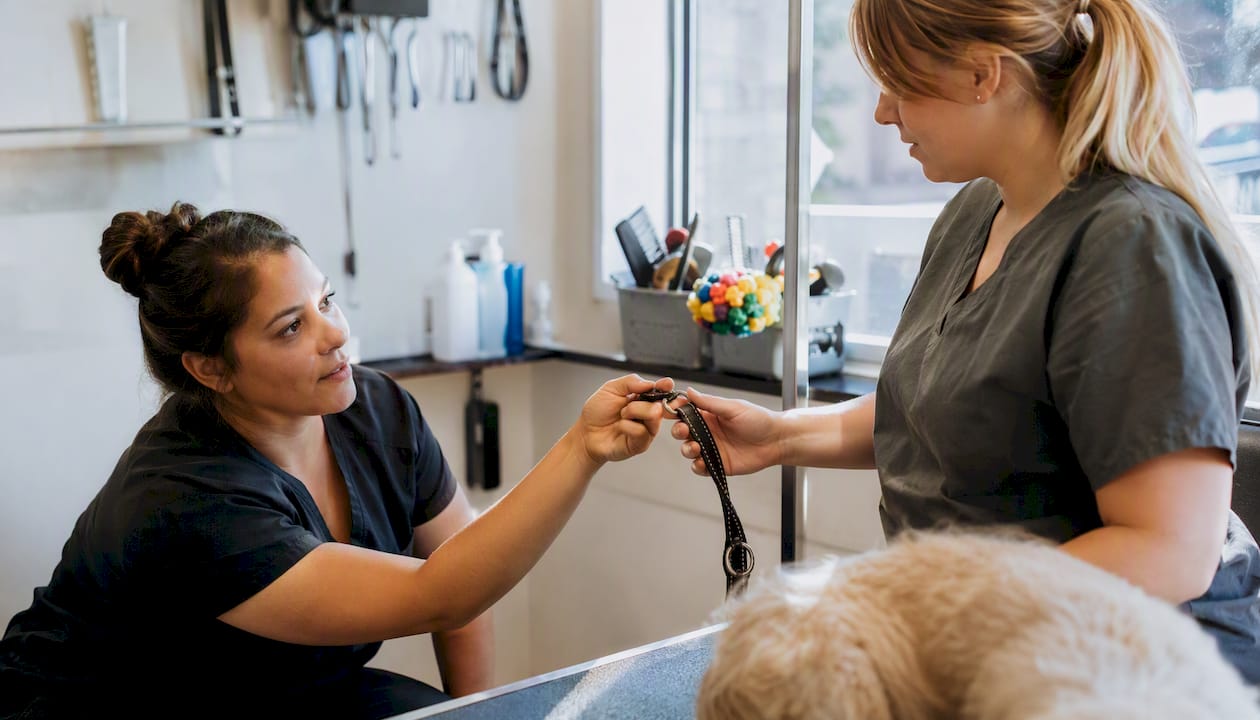
Pro Tip: Store a printed copy of every animal’s medical records, emergency contacts, and feeding instructions in a waterproof binder. When your booking system goes down, that binder keeps you operating safely.
How should you communicate during a crisis to protect client trust?
Communication is where most pet business owners lose control of a crisis. The instinct to wait until you have all the answers is understandable, but silence reads as negligence to worried pet parents.
Crisis communications expert Craig Enevoldsen recommends gathering verified facts before speaking, appointing a single spokesperson, and preparing consistent talking points. That single-spokesperson rule is the most important structural decision you can make before an incident happens.
Sample social media status post:
“We want to be transparent with our community. [Brief factual description]. The safety of every pet in our care is our first priority. We are actively working to resolve this and will post an update by [time]. Please reach out directly at [contact] with questions.”
Communication do/don’t guide:
| Do | Don’t |
|---|---|
| Send one factual message within 2 hours | Wait until you have all the answers |
| Name one spokesperson for all public statements | Let multiple staff post or comment publicly |
| Acknowledge the situation directly | Use vague language that sounds evasive |
| Give a specific time for your next update | Promise a resolution you cannot guarantee |
| Correct misinformation quickly and calmly | Argue with clients or commenters online |
| Follow up when the situation is resolved | Go silent after the first message |
Assign one person to monitor your Google Business profile, Facebook page, and any local community groups where your business is discussed. That person’s job is to flag misinformation to the incident lead within 15 minutes of spotting it, not to respond independently. Consistent, honest messaging from one voice is what preserves client trust when everything else feels uncertain.
How do you handle insurance claims and cashflow after a crisis?
Financial recovery moves in parallel with operational recovery, and the owners who manage it best start their documentation on day one.
Insurance claims checklist:
- Photograph all damage before any cleanup begins.
- List every damaged or destroyed item with estimated replacement cost.
- Pull your policy and identify your deductible, coverage limits, and exclusions.
- Contact your insurer within 24 hours of the incident, even if your damage assessment is incomplete.
- Keep a log of every conversation with your adjuster, including date, time, and what was discussed.
- Get at least two repair estimates before agreeing to any settlement.
Cashflow-preservation tactics:
Pet businesses commonly face cash flow trouble from seasonality, late client payments, and mismatched supplier terms. Recommended practice is maintaining a rolling reserve covering 6–8 weeks of operating expenses. If you’re in a crisis right now and that reserve doesn’t exist, here’s what to do immediately:
- Promote prepaid packages to generate cash now. A discounted 10-visit package sold today funds operations this week.
- Automate client payment collection to eliminate late payments during recovery.
- Negotiate extended terms with suppliers. Most will work with a long-standing account.
- Pause all non-essential subscriptions and discretionary spending.
- Explore a small business line of credit before you need it, not during the crisis.
Pro Tip: Before raising rates post-crisis, review how to communicate pricing changes to clients without losing them. A well-framed rate increase after a crisis can actually reinforce your value.
Recovery timeline:
| Phase | Timeframe | Key Actions |
|---|---|---|
| Immediate stabilization | Day 0–7 | Secure animals, notify clients, file insurance claim, document damage |
| Assessment and planning | Week 2–3 | Adjuster visit, repair estimates, staff re-onboarding plan |
| Phased reopening | Week 4–6 | Partial operations, client re-booking, deep cleaning certification |
| Full recovery | Month 2–3 | Full capacity, reserve rebuilding, BCDR plan update |
Real-world scenarios and the checklists that help you recover
Scenario 1: Operational outage (power failure during boarding)
A boarding facility in the Southeast lost power for 18 hours during a summer storm. The owner had a printed emergency binder with every dog’s feeding schedule, medication list, and owner contact. Staff used a battery-powered fan system and moved dogs to the coolest interior rooms. The owner sent a client SMS within 90 minutes and a follow-up email at the six-hour mark. Every dog was safe. Client retention after the incident was near-total because communication was fast and transparent.
The decisions that mattered: printed records, pre-assigned staff roles, and a client notification sent before anyone had time to panic.
Scenario 2: Reputational incident (social media complaint)
A grooming business received a Facebook post from a client claiming their dog had been injured during a groom. The owner had no designated communications lead. Three staff members responded to the post independently with conflicting information. Within four hours, the post had been shared 40 times in a local community group. The owner eventually responded, but the damage from the conflicting staff messages was already done.
The fix is simple and costs nothing: one person responds publicly, everyone else stays off the thread.
Checklists and templates you can use immediately:
- BCDR workbook: The empower-resilience BCDR template covers evacuation, communication scripts, and recovery checklists for boarding businesses.
- Hairy Situations crisis plan: A customizable pet-care crisis plan with sections for evacuation, shelter-in-place, and employee roles.
- Emergency evacuation protocols: Thedoggurus publishes detailed evacuation and safety protocol guidance specific to pet care facilities.
- Staff accountability playbook: A written operations manual, as outlined in Thedoggurus’s accountability guide, gives every team member a clear role before an incident occurs.
The businesses that recover fastest from a crisis are not the ones with the most resources. They are the ones with the clearest written plans and the most practiced teams. A 20-minute tabletop drill with your staff is worth more than a 50-page plan that no one has read.
Pro Tip: Run your first tabletop drill this week. Pick one scenario (power outage is a good start), walk your team through the first-response checklist, and identify the gaps. Write down what you find. That list becomes your next planning priority.
Why animal safety and client trust are the only two things that matter in a crisis
Most crisis advice focuses on protecting revenue. That’s understandable, but it gets the order wrong.
Every crisis decision in a pet care business should pass through two filters before anything else: Is every animal safe? and Do our clients know what’s happening? Revenue follows from those two things. It does not precede them.
The owners I’ve seen recover fastest from serious incidents share one trait: they never hesitated on safety, even when it was expensive. One boarding operator I know shut down for a full week after a flooding event, even though the damage was contained to one wing. She could have reopened in two days. She chose not to because she wasn’t certain the air quality was safe for the dogs. She lost a week of revenue. She kept every client.
That’s the calculus. When you protect the animals and communicate honestly, you give clients a reason to stay loyal. When you cut corners on either, you give them a reason to leave and tell others.
Run a 20-minute tabletop exercise with your team this week. Pick one scenario, walk through the first-response checklist, and find your gaps. The exercise itself builds the muscle memory your team needs when a real incident hits.
Thedoggurus gives pet care businesses a crisis-ready foundation
Pet care owners who want to move from reactive to prepared have a specific problem: generic business tools don’t account for the complexity of caring for animals. Thedoggurus is built for exactly this situation.
The platform gives you staff training modules that cover emergency roles and safety protocols, BCDR-aligned templates you can customize for your facility, and coaching from people who have actually run pet care businesses. The AI-powered learning tools mean your team can train and refresh their knowledge on their own schedule, not just when you have time to run a session. When a crisis hits, a trained team with clear written roles recovers faster than one that’s figuring it out in real time.
Explore the staff training and crisis-readiness tools on Thedoggurus, or visit Thedoggurus to find the plan that fits your facility size and team. Start with a trial and see how quickly your team’s confidence and preparedness improve.
Sources
These resources provide deeper detail on the topics covered above. Each one offers something specific you can apply directly.
- Crisis Communications for Pet Businesses Explained – Whisker Media
- Cash Flow Management for Pet Care Businesses: Survive Crunches and Build Long-Term Stability | GoPet AI Blog
- Disaster planning for pet boarding businesses
- Petsplusmag
- How the $261 Billion Pet Industry Became a Recession-Resistant Business Category