

Kennel attendant training is mostly hands-on onboarding, sharpened by a few targeted certifications. You don’t need a degree to start. What you need is a facility willing to train you, a pet first aid/CPR credential, and a documented path from shadowing to solo competence.
Here’s your fastest route in, based on how the Bureau of Labor Statistics and shelter onboarding programs actually describe the job:
- Apply for an entry-level or volunteer role at a daycare, boarding facility, or shelter. Most employers train on the job and consider prior animal exposure a bonus, not a requirement.
- Enroll in a pet first aid/CPR course before or during your first week. Employers weigh this heavily because attendants are usually the first person to spot a problem.
- Ask for a written onboarding checklist on day one. Programs modeled after groups like The Dog Gurus or shelter manuals typically map out what you should know by day 1, week 1, and week 4.
Key Takeaways
Kennel attendant training succeeds when hands-on onboarding, documented sign-offs, and a pet first aid/CPR certification come together within the first 12 weeks on the job.
| Point | Details |
|---|---|
| Start without a degree | Most kennel attendant training happens on the job; formal education isn’t required to get hired. |
| Get certified early | A pet first aid/CPR course is the single credential employers value most in new hires. |
| Follow a phased timeline | Structure training across day 1, week 1, weeks 2 to 4, and weeks 4 to 12 with clear sign-offs. |
| Use a written skills checklist | Score cleaning, handling, muzzle use, and leash management against a rubric, not memory. |
| Track progress systematically | Thedoggurus provides playbooks, sign-off tracking, and AI-powered nudges to keep onboarding on schedule. |
Table of Contents
- What Does Kennel Attendant Training Cover Day to Day?
- How Do You Structure the First 12 Weeks of Training?
- What Certifications Actually Help You Get Hired?
- What Should a Skills Checklist and Assessment Look Like?
- Where Does Kennel Attendant Training Lead?
- How Does The Dog Gurus Support This Training Plan?
- Where Can You Learn More About This Career Path?
- Why a Skills-First Approach Beats Credential-Chasing
- Build a Training Program That Actually Sticks
- Sources
What Does Kennel Attendant Training Cover Day to Day?
A kennel attendant’s job is physical, fast-paced, and full of small judgment calls most job postings never mention. You’ll spend your shift on feeding protocols, kennel cleaning, bedding changes, waste disposal, and walking or supervised play, often rotating through a dozen or more animals before lunch.
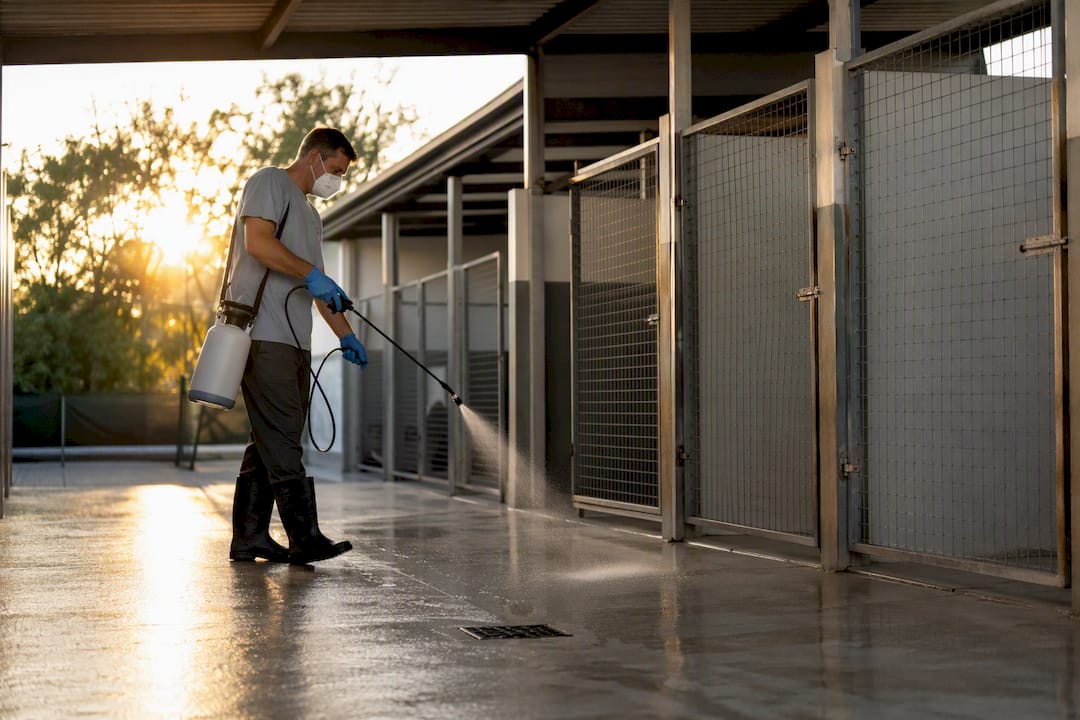
Feeding sounds simple until you’re managing different diets, medication schedules, and food-guarding dogs in the same run of kennels. Cleaning isn’t just hosing down a floor. It follows a sequence: remove the animal, spot-clean waste, apply the right disinfectant at the right dilution, let it dwell for the required contact time, and rinse before the next occupant goes in. Skip the dwell time and you’ve cleaned nothing.
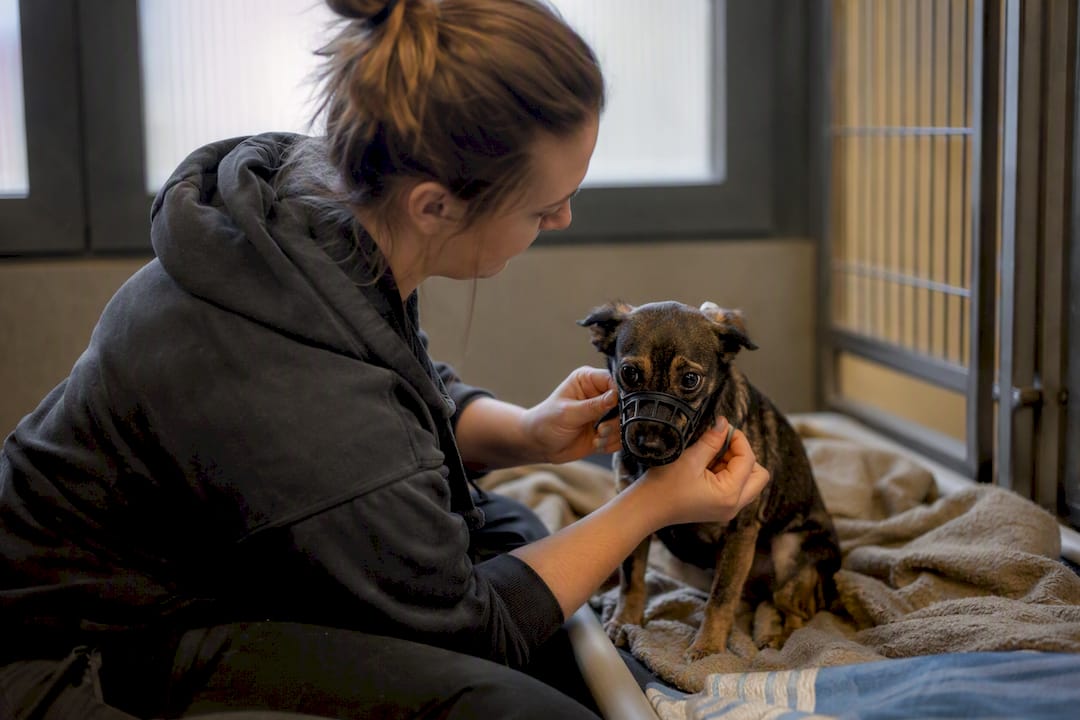
Animal handling is where training actually separates confident attendants from anxious ones. You’ll learn low-stress handling techniques: reading body language before you reach for a leash, using slow approaches with fearful dogs, and knowing when a muzzle is a safety tool rather than a punishment. Recognizing illness and stress signals matters just as much. A dog that suddenly stops eating, a cat that hides in the back of its cage, or a limp that wasn’t there yesterday all need to get flagged, not shrugged off. Frameworks like Colorado State’s canine pain scoring system give attendants a structured way to describe what they’re seeing instead of a vague “he seems off.”
Hygiene runs underneath everything. The CDC’s handwashing guidance applies directly to kennel work: wash between animals, wear gloves when cleaning or handling anything sick, and treat PPE as standard practice, not an inconvenience. Good facilities build this into their cleaning protocols so nobody has to guess what “clean enough” means.
Pro Tip: Keep a small notebook or shared app note during your first two weeks. Jot down every animal’s quirks (won’t eat kibble, guards toys, needs a slip lead) so you’re not relying on memory during a busy shift.
Documentation is a skill in itself. At intake, you’re recording behavior, medical notes, and owner instructions. During the shift, you’re logging feeding, medication, and anything unusual. At handoff, you’re passing that information to the next shift clearly enough that nothing gets missed. Employers consistently point to communication and documentation as core expectations, because attendants are often the first to notice subtle shifts in an animal’s health.
None of this works without soft skills. Punctuality matters because animals depend on schedules. Clear communication with pet owners builds trust, especially during drop-off and pickup. Teamwork keeps a chaotic shift running, and knowing when to escalate a concern to a supervisor rather than handling it alone is a skill you’ll use constantly in your first few months.
How Do You Structure the First 12 Weeks of Training?
A reproducible onboarding schedule turns “figure it out as you go” into measurable competence. Shelters and kennels that do this well, like the programs outlined in Best Friends’ staff training manual, break training into clear phases with sign-offs at each stage.
Day 1
- Facility orientation and safety walkthrough: exits, chemical storage, emergency contacts, and where the first aid kit lives.
- Shadow an experienced attendant through a full shift to see the pace and flow.
- Begin basic cleaning tasks under direct supervision, plus observation duties (watching how staff read animal behavior).
Week 1
- Move into supervised handling: leashing, moving dogs between runs, and assisting with feeding.
- Practice intake and drop-off scripts so you sound confident when talking to owners.
- Take a short quiz on disinfectant dilution ratios and contact times. This single checkpoint catches most early sanitation mistakes before they become habits.
Weeks 2 to 4
Independent execution starts here, but with sign-offs, not blind trust. A trainer observes you complete a full cleaning cycle, a feeding round, and a group of walks, then checks off each task on a skills sheet. This is also when many facilities introduce assisted medication administration, always under supervision, since dosing errors carry real consequences.
Minimal competency criteria at this stage typically include:
- Completing a standard kennel cleaning cycle within the facility’s target time (often 8 to 12 minutes per run, depending on size).
- Passing a supervised observation of safe leash handling and kennel transitions.
- Demonstrating correct PPE use without prompting.
Weeks 4 to 12
This stretch is where a hire becomes a genuinely competent attendant. Expect formal competency evaluations, cross-training into related skills like grooming or bathing assistance, and at least one emergency drill (a dog getting loose, a bite incident, a medical emergency). Documentation audits also happen here: a supervisor reviews your intake and shift notes for completeness and accuracy, not just legibility.
By week 12, most facilities expect an attendant to work an independent section of kennels, handle routine medical observations without hand-holding, and know exactly when a situation calls for a supervisor. If you want a structured framework for building this kind of timeline at your own facility, The Dog Gurus’ staff training guide walks through the same phased approach.
What Certifications Actually Help You Get Hired?
Formal education isn’t required to become a kennel attendant. According to Indeed’s kennel assistant job description, most training happens after hiring, and prior experience just gives you an edge in a competitive applicant pool. That said, a handful of credentials do move the needle with employers.
Pet first aid and CPR certification tops the list. Attendants are frequently the first responder when something goes wrong, so employers value proof you can act fast. A basic first aid and CPR course is often the single highest-leverage credential you can earn before your first shift.
Beyond that, low-stress handling workshops and basic kennel tech certificates round out a competitive resume, especially if you’re aiming for advancement rather than just an entry role.
Course formats vary widely, and the right one depends on your timeline:
- Online theory modules cover topics like medical terminology, kennel maintenance, and recordkeeping, similar to bundled learning paths used by commercial training programs. Good for building vocabulary before you start.
- In-person hands-on workshops teach handling, restraint, and bathing skills you genuinely can’t learn from a video.
- Community college certificate programs run longer, typically 6 to 18 months, and cost between $500 and $5,000, according to BLS training pathway data. These matter more for career advancement than for landing your first job.
Before you pay for any course, check four things: does the instructor have verifiable animal-care credentials, how many hours are hands-on versus lecture, do local employers actually recognize the certificate, and what do past students say in reviews. The Dog Gurus’ guide to vetting staff training breaks down exactly what separates a credential worth paying for from one that just looks good on paper.
What Should a Skills Checklist and Assessment Look Like?
A written checklist turns “I think they’re ready” into a defensible, repeatable standard. Your sample skills checklist should cover at minimum:
- Cleaning protocol: correct disinfectant dilution, proper contact time, and sequence (remove animal, clean, disinfect, rinse, dry).
- Safe handling: leash control, reading body language before approach, and knowing when to request backup.
- Muzzle usage: correctly fitting a muzzle without causing panic, and recognizing situations that call for one.
- Moving between kennels: controlling doors, preventing escapes, and managing multiple animals in transit.
- Leash management: avoiding tangles, maintaining control near other animals, and safe loading into vehicles or exercise yards.
Assessment works best through direct observation against a rubric rather than a written test alone. A trainer watches the task happen in real time and scores it against specific criteria: did the attendant wash hands between kennels, did they check the whiteboard notes before entering, did they use the correct restraint hold. Timed tasks work well for cleaning cycles. Scenario-based drills work better for handling: a reactive dog scenario, a mock medication mishap, an animal that slips its collar mid-walk.
Pro Tip: Run scenario drills as role-play with a coworker acting as the “difficult” animal or upset owner. It feels a little silly the first time, but it builds muscle memory for the moment it happens for real.
Score drills on a simple scale: did the attendant follow protocol, did they escalate appropriately, and did they document the incident afterward. Keep signed records of every completed checklist item. Beyond the initial 12 weeks, schedule refresher training every 6 to 12 months, especially for first aid certification renewal and any handling techniques that don’t come up often enough to stay sharp.
Where Does Kennel Attendant Training Lead?
Most kennel attendant roles don’t require formal education. What they do require is reliability, a clean training record, and a willingness to learn continuously. That’s genuinely good news if you’re starting from scratch.
Job growth in animal care roles has stayed steady, and BLS occupational data points to continued demand as pet ownership and boarding services expand. Pay typically starts near minimum wage in many markets and rises with experience, certifications, and specialization.
Common advancement paths include:
- Lead attendant or shift lead, overseeing newer hires and handling scheduling.
- Kennel manager, responsible for protocols, staffing, and facility operations.
- Veterinary assistant or registered veterinary technician (RVT), which requires additional schooling but builds directly on kennel experience.
To stand out early, document every competency you complete, volunteer for specialized tasks like medication administration or grooming assistance, and ask satisfied supervisors for references before you move on.
How Does The Dog Gurus Support This Training Plan?
A training blueprint only works if someone owns the follow-through, and that’s where most facilities quietly fall short. Checklists get written once and forgotten. Sign-offs happen inconsistently. Thedoggurus was built to close that gap for pet care businesses running exactly the kind of onboarding described above.
- Structured playbooks map directly onto the day-1-through-week-12 schedule, so managers aren’t building training documents from scratch.
- Sign-off tracking keeps a record of who completed which skill, when, and under whose supervision.
- AI-powered learning nudges flag when a staff member’s training has stalled, functioning like a 24/7 accountability partner instead of a manager chasing paperwork.
This guide was written by Oliver, drawing on published occupational data and shelter training standards to build a practical, verifiable framework. Employers looking for ready-made training packs can explore The Dog Gurus’ staff products directly.
Where Can You Learn More About This Career Path?
For job outlook and duty descriptions, the Bureau of Labor Statistics is the most reliable government source. For a full onboarding template, Best Friends’ staff training manual offers a real-world checklist structure. For employer-ready training tools, explore The Dog Gurus.
Why a Skills-First Approach Beats Credential-Chasing
The conventional advice tells new attendants to collect certificates before applying anywhere. That gets it backward. The research on this role points the other direction: employers hire for reliability and trainability first, then build competence through structured, on-the-job phases. A stack of certificates without hands-on hours behind them doesn’t impress anyone running a busy kennel.
What’s underrated is the sign-off system itself. Most facilities either skip it entirely or treat it as a formality, and that’s exactly where new hires get hurt, or hurt an animal, because nobody verified they could actually execute a task alone. A written checklist with real accountability behind it matters more than any single course on a resume.
If you’re starting out, prioritize finding a facility that trains deliberately over one that just needs a warm body. If you’re the one building that training program, the phased approach outlined here, backed by tools that track it automatically, will save you from repeating the same onboarding mistakes with every new hire.
— Oliver
Build a Training Program That Actually Sticks
If you’re running the kennel rather than working in one, you already know the real challenge isn’t writing a checklist once. It’s keeping every new hire moving through it consistently, catching the ones who stall out in week three, and proving to insurers or franchise partners that your team is genuinely trained, not just told what to do.

Thedoggurus was built for exactly this problem. Instead of a binder that sits on a shelf, you get staff training modules, sign-off tracking, and AI-powered learning nudges that flag stalled progress before it becomes a safety issue. It’s the difference between hoping your team retained the training and knowing exactly where each person stands. If you’re ready to replace ad hoc onboarding with a system that runs itself, check out The Dog Gurus’ staff products and see which package fits your team’s size.
Sources
- Animal Care and Service Workers (Bureau of Labor Statistics)
- Kennel Assistant job description (Indeed)
- Animal Care Staff Training Manual: Onboarding and Training New Animal Care Staff (Best Friends)