

How to Evaluate Dogs for Off-Leash Play
What comprises an excellent and efficient dog evaluation process? Keep reading to elevate your evaluation process to excellence and view a sample dog application that pet parents can fill out. This form becomes your foundational planning tool. You can get your Off Leash Play Application pdf and start using the new form in your evaluations today! (Click here for an editable word version of the application form)
What is the Goal of Your Dog Evaluation Process?
Have you really stopped and thought about your answer to this question? When you provide off-leash play services, dog evaluations or temperament testing is a generally accepted, required practice. However, in our experience not only is there a wide variety of goals for the process, there is even more variety in how evaluations are done.
If you have dogs that you find challenging to manage, that require special handling or that need to be put on a rotating schedule of play with only limited other dogs, then it’s time for you to take a fresh look at your evaluation process.
What comprises an excellent and efficient dog evaluation process? Keep reading to elevate your evaluation process to excellence and view a sample dog application form that becomes your foundational planning tool.
Your Primary Goal
Determine if the applicant dog is a good fit to your playgroups. It’s important to keep in mind the objective of physical safety and emotional well-being of all dogs during play.
Four Steps of an Excellent Dog Evaluation Process
- Assess applicant dog’s communication skills
- Observe behavior and stress levels with the new unfamiliar place (your facility), people and dogs
- Determine dog’s response when he’s uncomfortable
- Understand dog’s social interactions and fit of behavior to your playgroups
Step 1. Assessing Communication Skills
Not all dogs have polite communication skills in social interactions with other dogs. Assess these communication skills by
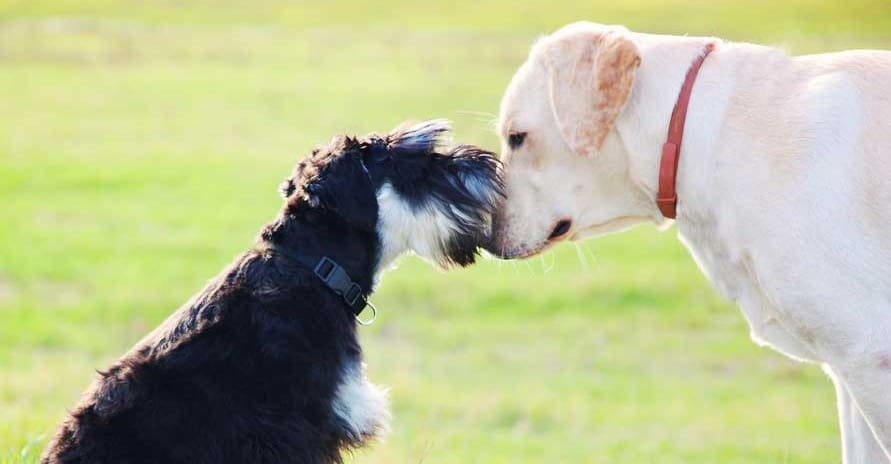
- Observing dog greetings and their subsequent behavioral interactions
- Allowing all forms of dog communication including warning growls, snaps and barks
- Preventing aggressive attacks, for safety
- Allowing lower level aggressive displays (an important part of dog communication and one method for dogs to work out their social rank)
Step 2. Observe Behavior in Unfamiliar Setting
You cannot expect to fully know all aspects of a dog’s behavior during the short evaluation process. You want to assess how a dog responds in a situation that might be initially uncomfortable. The initial evaluation session is a time that “pushes” most applicant dogs as they are dealing with the unfamiliar. Use this to your advantage so you can see a potential inappropriate aggressive response in the evaluation scenario instead of in the dog playgroup. You will walk a fine line in trying to make the applicant dog comfortable so you can observe it’s natural behaviors and recognizing this may be a stressful event for them.
Step 3. Determine Dog Behavior When Uncomfortable
Knowing in advance situations that make an applicant dog uncomfortable is very valuable for planning the evaluation. For this reason excellent centers will obtain written dog application forms in advance from dog owners. Getting the application information in advance gives you time to assess scenarios that could result in an inappropriate aggressive response and create a plan to respond to them during the evaluation. A couple of examples:
Clients respond in the application that their dog:
- Does not like men in hats or,
- Barks at large black dogs it meets
During an evaluation most centers can replicate the applicant dog meeting a man in a hat and a big black dog. In our experience, very few of these “aggressive situations” replicate as described in the application during the evaluation, but it does serve as the right opportunity to test them out.
Step 4. Understand Social Behavior and “Fit” to Playgroup
Your observation of dog behavior during the evaluation process is first on the applicant dog (in part two you will learn what the tester dogs tell you). Once you rule out inappropriate aggression in the applicant dog you will decide if joining your playgroups is an emotional good fit.
Signs the environment is a good fit include:
- Reduction in stress signals displayed
- Green body language (see Off-Leash Dog Play book)
- Interest in meeting and engaging with tester dogs
- Play behaviors
Signs that may indicate social playgroups are not a good fit include:
- Ongoing, multiple stress signals and displacement behaviors
- Yellow body language (see Off-Leash Dog Play book)
- Lack of interest in meeting or engaging with tester dogs
- Rude behaviors that continue after correction from tester dogs
- Bully behaviors (consistently pinning or rolling other dogs)
- Avoidance of applicant dog by tester dogs
Elevate to Excellence
You will gain confidence in your dog evaluations and know they are efficient and effective when you have:
- Clearly defined your dog acceptance policy
- Set goals for your evaluation
- Received a thorough dog application form before the evaluation
- Defined these items
- existing dog playgroups,
- staff abilities to manage dogs, and
- core group of tester dogs
With these items in place, you will be able to rely on the process to screen out dogs initially that will not be a long-term good fit.
Results
You will create easier to manage playgroups without the management exceptions and behavior problems that surface later. So many times when we consult with facilities and recommend dismissal of certain dogs, we hear comments that staff had doubts during the evaluation process about that dog. The lesson here is “trust your gut”!
The dog evaluation process is one where you should get a clear “yes, it’s a good fit” response for acceptance into your facility in majority of cases. We do recognize there are instances where an applicant dog can take time to adjust to the environment of group play. Be sure you have a plan in place for slowly introducing these dogs to play so they have a positive emotionally healthy experience on every visit. Make sure the dogs added to your playgroups keep play safe and fun for everyone!
What happens if the dog isn’t a good fit? Communicating bad news or behavior concerns to owners is often a challenge so we’ll have an entire separate blog post about this later in the month. PLUS, this is our focus for this month’s live Q&A phone call. Think about your tough cases and submit them to us next week as examples we may select to use during the live call.