

Dog Activities Revealed Part 2
This month’s bonus item outlines the five different types of activities that should be provided when dogs are playing off-leash. Last week we revealed the secrets behind the first three types of activities, keep reading to learn more about the last two.
To review part 1 of they series, click here.
4. Leadership exercises
The Dog Gurus spent the month of January 2014 detailing the importance of leadership and provided specific guidelines to teach and objectively score what we consider the most important leadership exercises (the come command, gate boundary, and group sits). Each of the three exercises help your staff establish themselves as leaders in the eyes of the dogs. They also help to ensure the safety of the dogs during playgroup by keeping leaders engaged, dogs attentive to leader and making key events, like moving through gates safer. Assess the quality of your staff’s leader skills with these criteria:
- Objectively measure their performance in each exercise weekly & reward skill improvements
- Observe their gate management during play sessions that they are using their gate boundary skills
- Observe them using recalls as a tool to intervene and manage dogs during play sessions
- Observe them using group sits during games and gate management
- Keep it fun with individual competitions to improve scores, get challenging dogs to recall and achieve personal best scores (Participate in The Daycare Games competition each February)
5. Dog engagement
Who do you always want to please or have a difficult time refusing requests? For most of us it’s our spouse, followed by family and close friends. Why is this? We have a close relationship or bond with them which makes us want to please them. This concept translates to dogs and the purpose of the dog engagement activities is to deepen the relationship of your leaders with each individual dog. In time they will find this focus makes managing the playgroups much easier and we think more rewarding too! Encourage your staff to engage and bond with dogs in these activities:
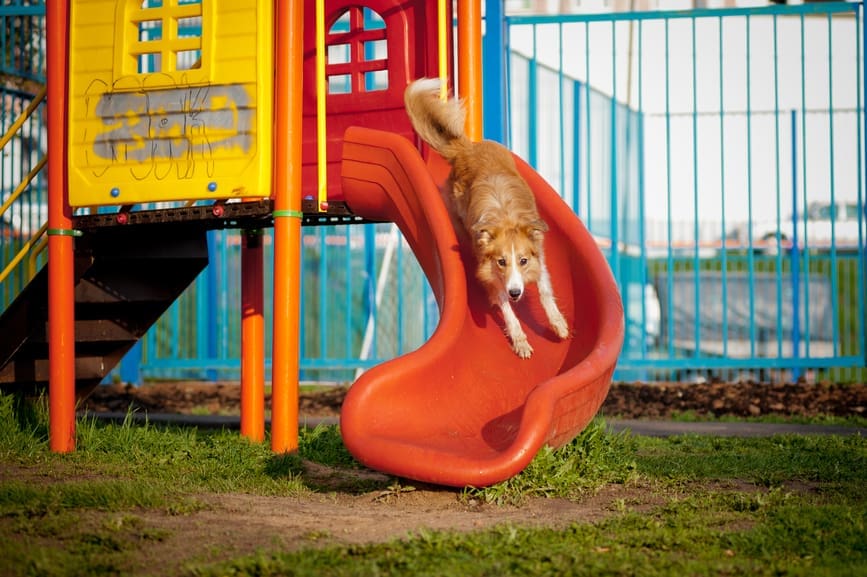
- Encourage dogs to use play equipment – Invest in play equipment and use it for fun dog play. Using the ramps and stairs can help dogs increase confidence as they try new things. However, if it is unfamiliar to them many dogs will ignore the equipment so staff will need to encourage them to walk or jump on it or through openings. Be sure they praise each dog that learns a new “trick” on the play equipment and share with your client.
- Play bow to dogs – Staff leaders can use the playbow movement to initiate play with a dog. This is great to try with shy and timid dogs (be sure they use softer and slower movements) or to get the dog group actively playing again. Encourage your leaders to try this with dogs that do not normally initiate in dog play; they may need to be taught how to play.
- Recall wall flowers – We realize not all dogs enjoy active play with other dogs and will observe from the sidelines. However, these dogs are a part of the group and too often get ignored because they don’t cause any trouble. It is important to work to engage with these dogs each shift so leaders do build a relationship with every dog. Make sure your leaders engage the wallflowers in some type of activity during their playgroup sessions.
The real value in keeping staff engaged with a formal activity schedule is you end up with easier to manage playgroups. Combining the five different types of activities on a daily basis will create great leaders in the eyes of the dogs and strong relationships between the dogs and staff. Sue Sternberg explains the final result well in her book:
“Nothing gives you more power and control than being the one to provide access to fun. Dogs like you more…when you’re well-liked, you get listened to, you get paid attention to, and you have control over other situations having nothing to do with play.”
While the books we are recommending were written for dog owners we found great information that helped us create our activity schedule.