

Doggy day care and training is defined as a professional service combining supervised group care with structured behavioral education for dogs. The industry term used by certified professionals is “canine day training” or “daycare and train,” though pet owners searching for “pet daycare near me” will encounter both labels. The best facilities deliver socialization, physical exercise, and dog obedience training under one roof, so your dog grows calmer and better behaved over time. Vaccination standards, temperament evaluations, and certified trainers are the three pillars that separate quality programs from basic kennels. Thedoggurus has spent years helping pet care professionals build exactly these kinds of programs, and this guide gives you the owner’s side of that knowledge.
What are the prerequisites for doggy day care and training?
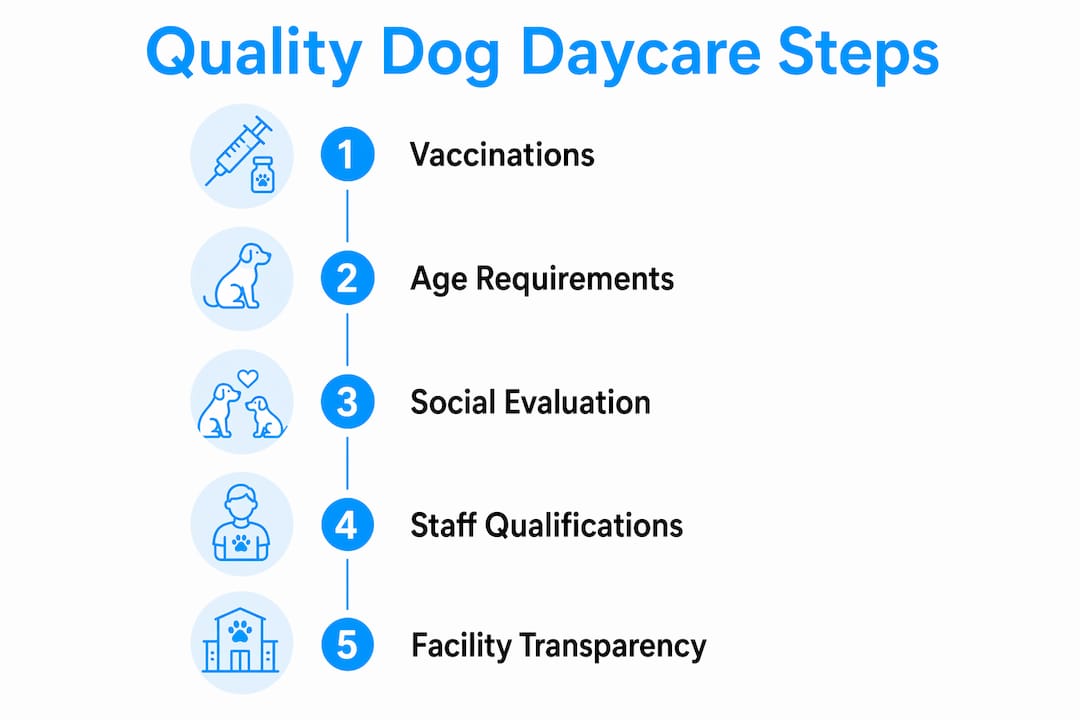
Preparation matters before your dog sets a paw inside any facility. Most programs require proof of current vaccinations, and the standard list includes Rabies, Distemper, Bordetella, and Canine Influenza. Shots must be updated at least 14 days before your dog’s start date. That two-week window lets immunity build fully, protecting every dog in the playgroup.
Age requirements are equally firm. Daycare and train programs typically accept dogs at a minimum of five months old. In-home foundational training, however, can begin as early as 13 weeks. Starting early matters because the socialization window for puppies closes around 16 weeks, making puppy socialization classes one of the highest-return investments you can make.
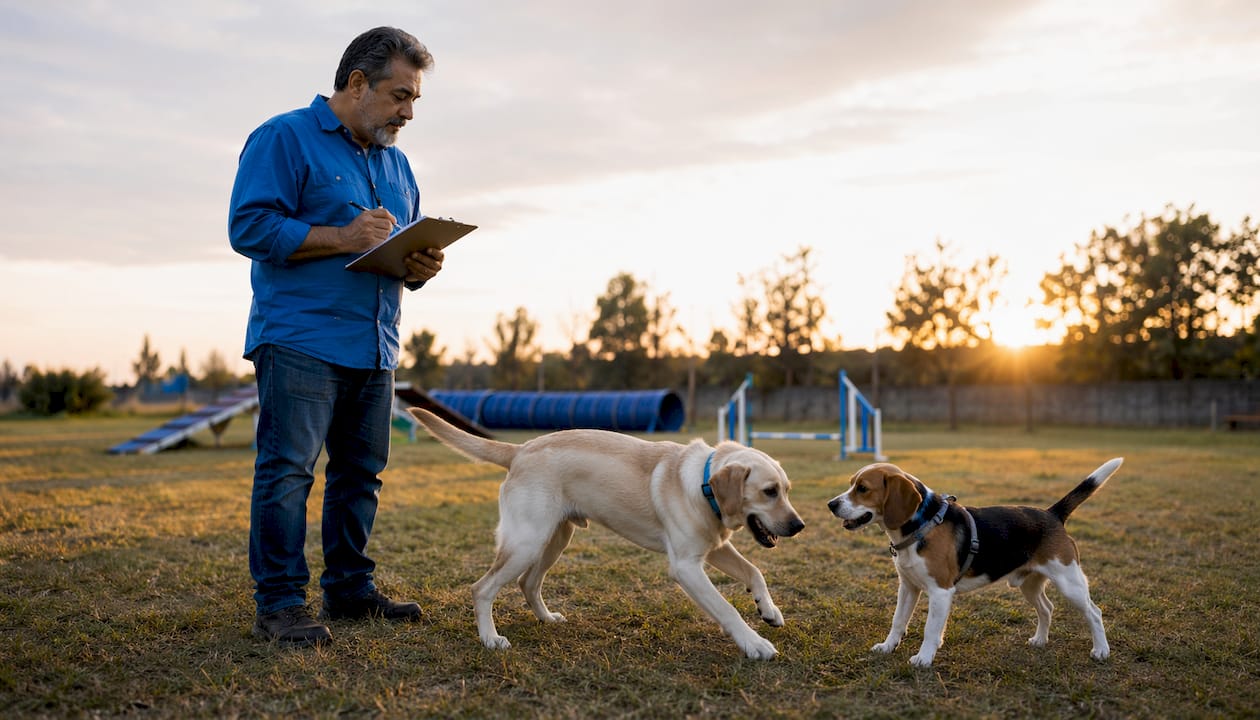
Before acceptance, most quality facilities conduct a Meet and Greet or Social Evaluation. This is a professional temperament assessment, not a casual playdate. Staff observe how your dog reacts to other dogs, new people, and unfamiliar environments. Bring vaccination records to this appointment. A dog that passes the evaluation is a safer, happier fit for group play.
Reservations and cancellation policies also deserve attention upfront. Advance reservations are standard, and cancellations made the same day often trigger a fee of around $34 per incident. Late pick-up fees apply at facilities with fixed closing hours. Knowing these policies before you enroll prevents surprise charges.
Pro Tip: Ask the facility for their written vaccination and cancellation policy before your first visit. A facility that cannot produce clear written policies is a red flag.
| Prerequisite | Common requirement |
|---|---|
| Rabies vaccine | Current, proof required |
| Distemper/Bordetella/Influenza | Updated 14 days before start |
| Minimum age (daycare and train) | 5 months |
| Minimum age (in-home training) | 13 weeks |
| Temperament evaluation | Required before acceptance |
| Advance reservation | Required; same-day cancellation fees apply |
How to identify high-quality dog daycare and training services
Staff qualifications are the single most reliable indicator of a quality program. Effective trainers prioritize formal education and documented experience over general animal interest. Ask specifically about certifications from recognized bodies like the Certification Council for Professional Dog Trainers (CCPDT) or the International Association of Animal Behavior Consultants (IAABC). A trainer who cannot name their credentials is not the right fit for your dog.
The structure of the daycare program itself matters just as much as the staff. High-quality programs group dogs by size, temperament, and energy level, and they schedule mental enrichment activities alongside mandatory rest periods. Open-play models, where all dogs mix freely for hours, frequently lead to overstimulation. A structured model produces calmer, better-behaved dogs at the end of the day.
When evaluating a facility, look for these specific features:
- Grouped playgroups by size and temperament, not just breed
- Scheduled rest periods built into the daily routine
- Mental enrichment activities like puzzle feeders or scent work
- Transparent training methods with written explanations available
- Staff-to-dog ratios posted and enforced
- Clear behavior reporting sent to owners after each session
Transparency is a strong signal of professionalism. A quality facility welcomes your questions about group play safety and will explain exactly how they handle a dog that becomes reactive or anxious. Facilities that deflect these questions should be crossed off your list.
Pro Tip: Schedule a facility tour during active daycare hours, not before or after. Watching how staff manage a live playgroup tells you more than any brochure.
How to combine daycare with obedience training for real results
Combining care and training works through two main program types. A “daycare and train” program integrates short training sessions into your dog’s regular daycare day. A “board and train” or canine boarding and training program has your dog stay at the facility for multiple days or weeks, with training woven throughout. Both models produce faster results than weekly group classes alone because dogs receive repetition in a structured environment.
Typical skills covered in these programs include:
- Leash manners — walking without pulling on a standard leash
- Recall — coming reliably when called, even with distractions
- Sit, down, and stay — foundational obedience commands
- House training — eliminating in appropriate locations
- Greeting manners — not jumping on people
- Crate comfort — settling calmly in a crate or designated space
In-home sessions play a critical role in locking in these skills. Training results depend on consistent owner involvement, and complex behaviors like housebreaking require ongoing effort at home. The facility does the heavy lifting during the day, but you reinforce the same commands and rules every evening. Without that consistency, progress stalls.
A sample weekly schedule for a daycare and train program might look like this:
| Day | Morning | Midday | Afternoon |
|---|---|---|---|
| Monday | Drop-off, group play | 15-min training session | Rest period, pick-up |
| Wednesday | Drop-off, group play | 15-min training session | Enrichment activity, pick-up |
| Friday | Drop-off, group play | 15-min training session | Group play, pick-up |
Pro Tip: Ask your trainer for a written summary of each session’s commands and outcomes. Use that summary to practice the same skills at home the same evening.
Daycare alone is primarily for exercise and social interaction. Behavior modification requires ongoing, structured training sessions. Combining both gives your dog the physical outlet and the mental education needed for lasting change.
Common mistakes with dog daycare and training — and how to avoid them
Overstimulation is the most underestimated risk in dog daycare. Open-play daycare models can trigger cortisol spikes in dogs, leading to reactive or aggressive outbursts that would not occur in a calmer setting. A dog that comes home exhausted and irritable every day is not thriving. That dog is overwhelmed. Structured programs with scheduled rest prevent this pattern.
Mismatched playgroups create a second category of problems. A small, anxious dog placed with high-energy large dogs faces stress and potential injury. Quality facilities use temperament evaluations to prevent these mismatches. If a facility skips this step, the risk falls on your dog.
Unrealistic expectations about training timelines cause more owner frustration than any other factor. Board and train programs do not guarantee the elimination of all behavioral issues. Complex behaviors require months of consistent reinforcement, not a single two-week stay.
Owner responsibilities that directly affect outcomes include:
- Practicing commands daily using the same words and hand signals the trainer uses
- Maintaining consistent rules at home so your dog does not learn two different sets of expectations
- Communicating with staff about any behavioral changes you notice at home
- Understanding cancellation policies to avoid unexpected fees around $34 per incident
- Picking up on time to prevent late pick-up charges and reduce your dog’s stress
Pro Tip: If your dog resists going to daycare after the first two weeks, ask staff for a behavior report. Resistance is often a sign of poor group fit, not a bad dog.
When your dog shows signs of stress, such as refusing to eat, excessive panting, or hiding after pick-up, raise the concern with the facility immediately. A quality program will adjust the group placement or daily schedule rather than dismiss your observation. You can also review managing problem behaviors to understand what normal adjustment looks like versus a genuine mismatch.
Key Takeaways
Combining structured daycare with consistent obedience training produces the most lasting behavioral results, but only when owners reinforce the same commands and rules at home every day.
| Point | Details |
|---|---|
| Vaccination timing is non-negotiable | Shots must be current and updated at least 14 days before enrollment. |
| Temperament evaluation protects every dog | A professional social evaluation determines safe group placement before acceptance. |
| Structured beats open play | Programs that group dogs by size and energy and schedule rest produce calmer dogs. |
| Owner consistency drives results | Training progress stalls without daily reinforcement of commands at home. |
| Know the policies before you enroll | Cancellation and late pick-up fees are standard; understanding them prevents extra costs. |
What I’ve learned from years of working with dogs in daycare and training
The biggest mistake I see pet owners make is treating daycare and training as separate decisions. They enroll their dog in daycare for the social benefits and then wonder why behavior at home does not improve. Daycare gives your dog an outlet. Training gives your dog a framework. You need both working together.
The second lesson took me longer to accept. The facility is not the whole solution. I have watched dogs graduate from excellent board and train programs and regress within three weeks because the owner went back to inconsistent rules at home. The dog was not broken. The system was. Owners who commit to practicing commands daily see results that last years.
I also believe the best dog training services are the ones that teach you as much as they teach your dog. A trainer who hands back a well-behaved dog without explaining what they did has not actually helped you. Look for programs that include owner education sessions, written progress notes, and clear guidance on enrichment scheduling at home. That is the difference between a short-term fix and a lasting bond.
— Oliver
Thedoggurus: your trusted resource for dog care and training
Pet owners deserve clear, expert-backed guidance when choosing care and training for their dogs. Thedoggurus brings together industry-tested knowledge on off-leash play safety, staff training, and behavioral best practices built by people who have run real pet care businesses.

Whether you are searching for affordable pet care options or trying to find the best dog trainers in your area, Thedoggurus gives you the frameworks to evaluate any facility with confidence. From vaccination protocols to structured play standards, the expert resources at Thedoggurus cover every stage of the dog care decision. You do not have to figure this out alone. The right information makes every step easier for you and better for your dog.
FAQ
What vaccinations does my dog need for daycare?
Most facilities require current Rabies, Distemper, Bordetella, and Canine Influenza vaccines, with all shots updated at least 14 days before the start date.
What is the minimum age for a daycare and train program?
Most daycare and train programs accept dogs at a minimum of five months old, while in-home foundational training can begin as early as 13 weeks.
How is a social evaluation different from a regular playdate?
A social evaluation is a structured professional assessment of your dog’s temperament and behavior around other dogs and people, used to determine safe group placement before acceptance into a program.
Will board and train fix all my dog’s behavior problems?
Board and train programs do not guarantee elimination of all behavioral issues. Lasting results require consistent owner reinforcement of commands and rules at home after the program ends.
How much does dog daycare typically cost?
Full-day dog daycare rates typically run around $34 per day, with package options such as 10-day or 20-day bundles offering roughly 10% savings compared to drop-in rates.