

A great front-desk training program produces one thing: staff who handle check-ins, payments, and anxious pet parents accurately and calmly, every single time, without needing a manager to bail them out. That’s the whole job. If your training doesn’t produce that outcome, it doesn’t matter how thorough the orientation packet looked on paper.
This article gives you the tools to build that outcome, not just talk about it. You’ll find:
- A day-one and week-one onboarding checklist you can copy into your LMS or print
- SOP templates for check-in/out, incident reports, and refunds
- Scripts for de-escalation, phone triage, and late pickups
- A staged 90-day training plan with built-in competency checks
- QA methods to confirm skills actually stuck
If you’d rather not build these from scratch, The Dog Gurus has ready-made front-desk modules and templates built by people who’ve run these businesses themselves.
Key Takeaways
Front-desk training succeeds when staged onboarding, written SOPs, and role-play practice combine to produce staff who verify records, handle payments, and de-escalate clients without supervision.
| Point | Details |
|---|---|
| Front-load the paperwork | Send e-learning and forms before day one so shadow shifts start immediately. |
| Pair skills training with systems training | Teach empathy and de-escalation alongside scheduling and payment accuracy. |
| Write it down | Use SOP templates for check-in/out, incident reports, and refunds instead of relying on memory. |
| Stage the first 90 days | Move from shadowing to independent shifts to full sign-off in defined phases. |
| Use Thedoggurus for ready-made modules | Its templates, quizzes, and AI learning tools cut the build-from-scratch time significantly. |
Table of Contents
- Day-One and Week-One Onboarding Checklist for Front-Desk Hires
- Core Front-Desk Skills to Teach and Assess
- SOPs, Templates, and Checklists Every Front Desk Needs
- Choosing Technology That Front-Desk Staff Can Actually Use
- The 90-Day Training Plan for New Front-Desk Hires
- Scripts and Escalation Paths Worth Practicing Out Loud
- How to Confirm Front-Desk Staff Are Actually Ready
- Why the Checklist Matters More Than the Personality Hire
- Let The Dog Gurus Handle the Training Build-Out
- Sources
Day-One and Week-One Onboarding Checklist for Front-Desk Hires
Your new hire’s first week determines whether they’re an asset in 30 days or a liability you’re still fixing in 90. Front-desk staff step into a role that job postings routinely describe as the “first point of contact” for scheduling, greetings, and customer service, which means gaps show up immediately, in front of clients.
Structure the first week around this sequence:
- Paperwork and credentials. Collect tax forms, verify any required certifications, and confirm the hire understands your vaccination and wellness policy before they touch a booking.
- Facility orientation. Walk the building, introduce key contacts, and review evacuation routes and emergency exits on day one, not week three.
- Assign a shadow partner. Pair the new hire with a specific, named staff member for their first five shifts.
- Grant sandbox tech access. Give them a test login, a simulated booking to enter, a mock POS transaction, and a practice incident report to file.
Standardized onboarding checklists reduce overwhelm for new hires in animal care settings and help them retain essential safety and operational tasks instead of relying on memory alone.
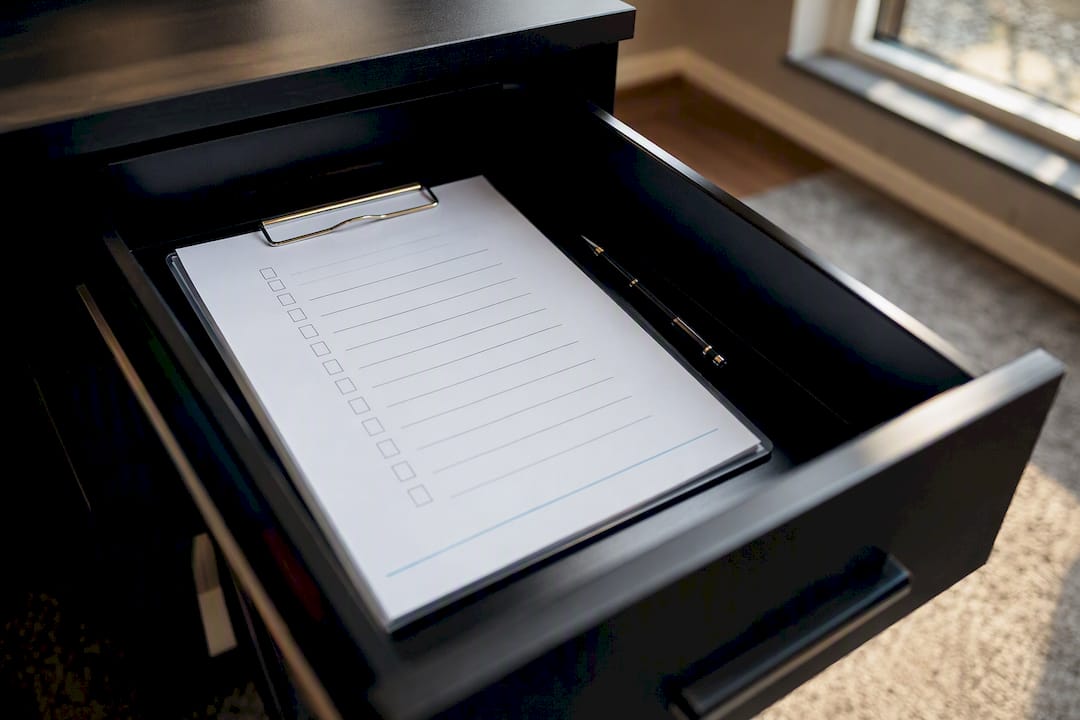
Pro Tip: Print the checklist. A laminated sheet taped inside a desk drawer gets used far more often than a PDF buried in a shared drive.
Core Front-Desk Skills to Teach and Assess
Front-desk training splits into two buckets: how staff talk to people, and how accurately they run the systems behind the counter. Skip either one and the whole operation gets shaky.
On the people side, teach active listening and empathetic phrasing before anything else. Reception staff need both emotional skills and technical accuracy to do the job well, and training manuals built for front-desk roles treat these as equally weighted, not soft extras. Practice short scripts for common friction points: a late arrival, a forgotten vaccination record, a client who’s anxious about drop-off.
On the operational side, train:
- Appointment and scheduling accuracy, including how to handle double-bookings
- Vaccination and wellness record verification before a pet is accepted
- Payment processing, refund policy, and how to document exceptions
Teach both sides through role-play, shadowed real shifts, short quizzes, and scripted phone-call practice where a trainer plays a difficult caller. This combination builds confidence faster than lecture-style training alone.
Pro Tip: Record a five-minute mock call between two staff members and replay it during a team huddle. Hearing your own script out loud catches awkward phrasing nobody notices on paper.
SOPs, Templates, and Checklists Every Front Desk Needs
Verbal training fades. Written systems don’t. A front desk running on memory alone will eventually miss a vaccination record or misplace a refund approval, and a laminated SOP is what catches that mistake before it becomes a real problem.
Three templates matter most:
- Check-in/check-out handoff. Fields for pet name, arrival time, vaccination status confirmed (yes/no), belongings checked in, and the name of the staff member completing the transfer.
- Incident report. Time, location, people present, description in the reporter’s own words, immediate action taken, and who was notified. A standardized format speeds up manager response and reduces legal exposure.
- Refund/payment adjustment. Reason for adjustment, amount, approving manager’s signature, and the date processed.
| Template | Core Fields | Why It Matters |
|---|---|---|
| Check-in/out handoff | Arrival time, vaccination status, belongings, staff name | Prevents unverified pets from entering play areas |
| Incident report | Time, witnesses, description, action taken, notified party | Creates a paper trail for insurance and follow-up |
| Refund/payment | Reason, amount, manager sign-off, date | Stops unapproved discounts and keeps books clean |
Choosing Technology That Front-Desk Staff Can Actually Use
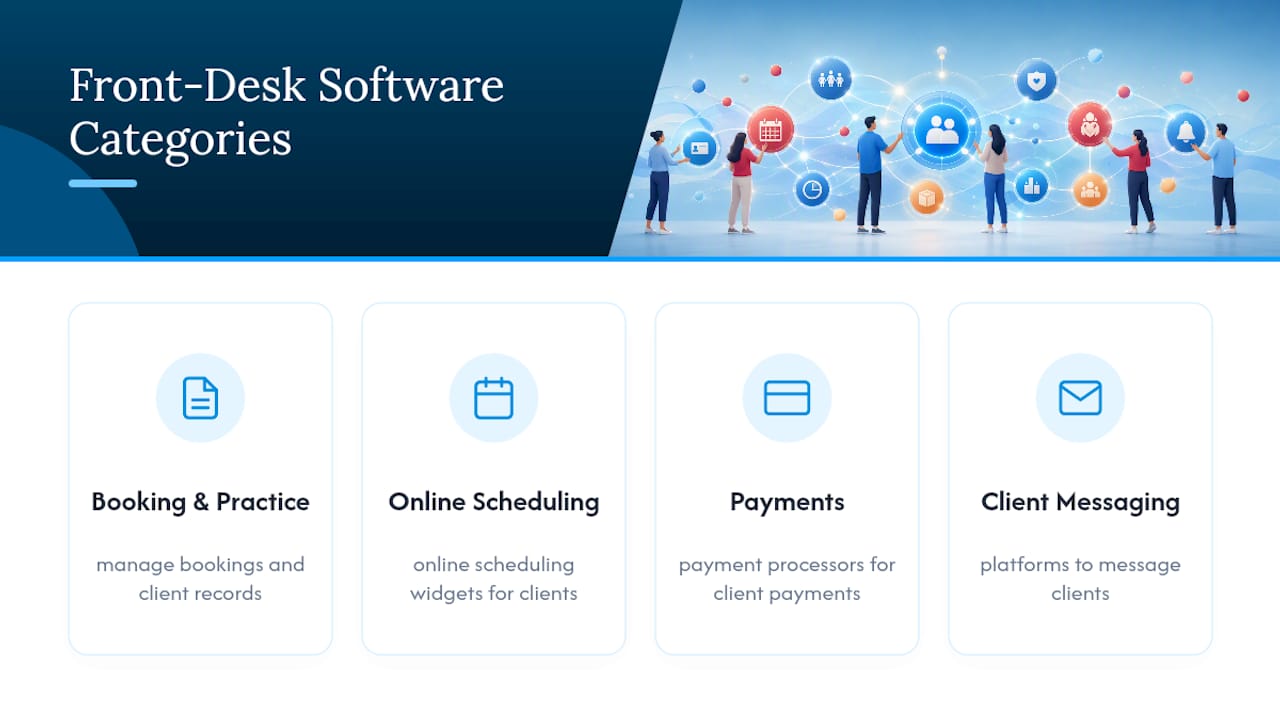
Front-desk software falls into a handful of categories: booking and practice management systems, online scheduling widgets, payment processors, client messaging platforms, and staff mobile apps for checking schedules on the go.
Train staff on each system using a sandbox account first, never live client data. Build a short data-entry checklist so every staff member enters pet names, vaccination dates, and contact info the same way. Review permission settings so front-desk staff can see what they need without accessing payroll or owner-level financials, and run a quarterly audit to confirm nobody’s sharing logins. Client records contain sensitive information, so treat login sharing and unattended screens as policy violations, not minor slips.
The 90-Day Training Plan for New Front-Desk Hires
Staged training beats a single overwhelming orientation day. Breaking the process into phases with shadowing and checklists helps new hires learn faster and make fewer errors than dropping them into live shifts unsupervised.
- Phase 0 (pre-start): Send e-learning modules and required paperwork before day one so orientation time goes to hands-on practice, not forms.
- Phase 1 (days 1 to 7): Shadow an experienced teammate, run supervised check-ins, and hold a five-minute debrief at the end of each shift.
- Phase 2 (weeks 2 to 6): Move to independent shifts with weekly quizzes, spot audits, and one role-play session per week covering a new scenario.
- Phase 3 (months 2 to 3): Sign off on core competencies, sample client feedback, and set a growth plan for cross-training or advancement.
| Phase | Timeframe | Focus |
|---|---|---|
| Phase 0 | Before day 1 | E-learning, paperwork, policy review |
| Phase 1 | Days 1 to 7 | Shadowing, supervised check-ins, daily debriefs |
| Phase 2 | Weeks 2 to 6 | Independent shifts, weekly quizzes, audits |
| Phase 3 | Months 2 to 3 | Competency sign-off, feedback sample, growth plan |
Scripts and Escalation Paths Worth Practicing Out Loud
Reading a script silently and performing it under pressure are two different skills. Run these scenarios as actual role-play, with a manager playing the difficult client.
- Anxious drop-off: “Good morning! Let’s get Bailey checked in. Can you confirm his vaccination records are current before we head back?” Verify records on screen while talking, not after.
- Sick-pet phone call: Ask two or three screening questions, then route anything beyond routine symptoms to a trained staff member immediately rather than guessing.
- Late pickup: State the policy plainly, note the time in the system, and keep tone neutral. “We do have a late fee after 6:00 PM, and I’ve noted your arrival time in the system.”
Front-desk staff often serve as a facility’s emotional anchor for worried clients, and training that skips active listening and de-escalation leaves that role unfilled when it matters most.
Any incident, from a scuffle to a fall, triggers the same first move: stabilize the situation, then notify the on-duty manager before doing anything else.
How to Confirm Front-Desk Staff Are Actually Ready
Training isn’t done when the checklist is signed. It’s done when a manager can observe the behavior and trust it without hovering.

Watch for three things during observation: greeting tone, completeness of vaccination and paperwork verification, and data-entry accuracy on the first attempt.
Then keep checking. Weekly spot checks catch small drift early, monthly audits catch pattern problems, and periodic client feedback sampling tells you what the checklist can’t. Automated scheduling reminders also cut down on no-shows and free up reception time for the conversations that actually need a human.
Why the Checklist Matters More Than the Personality Hire
Owners tend to hire front-desk staff for charisma and hope the systems knowledge follows. It’s usually backward. A warm, chatty hire with no checklist discipline will eventually skip a vaccination check during a busy Saturday rush, and that’s the moment your liability exposure spikes.
What actually works is boring: shadow shifts, laminated SOPs, and a manager who spot-checks weekly instead of assuming training “took.” The businesses that get this right treat front-desk competence as a measurable skill, not a personality trait. That’s a mindset shift more than a paperwork one.
The Dog Gurus builds training resources from people who’ve run these front desks themselves, and that practitioner grounding shows up in how specific the templates get. If you take one thing from this article, make it this: write the checklist down before you hire the next person, not after something goes wrong.
— Oliver
Let The Dog Gurus Handle the Training Build-Out
Building every checklist, script, and SOP from scratch takes weeks most owners don’t have between shifts, hiring, and actually running the business. Thedoggurus gives you that groundwork already built, so your next front-desk hire starts strong on day one instead of week six.
The platform includes front-desk training modules, printable onboarding checklists, incident-report templates, and role-play exercise guides built specifically for dog daycare, boarding, grooming, and pet-sitting operations. Its AI-powered learning tools act as an ongoing accountability partner, prompting staff through quizzes and skill checks so you’re not the only one tracking whether training actually stuck. For a full curriculum breakdown, visit the complete daycare training guide and see which modules fit your team, or head to Thedoggurus to start exploring the platform today.
Sources
For internal templates, review onboarding staff in your pet business and starting a dog daycare and boarding operation. For wellness and safety protocols that intersect with check-in verification, see dog daycare cleaning protocols and operating a safe dog daycare.
- The Ultimate Daycare & Boarding Business Hiring Guide | Time To Pet
- Aaha Veterinary Receptionist Training Manual
- Veterinary Receptionist Excellence: A Comprehensive CSR Training Guide | PupPilot
- Animal Daycare Provider Onboarding Checklist – Open Onboarding
Recommended
- Doggy Daycare Training: Your Complete 2026 Guide – The Dog Gurus
- How to Reduce Problem Behaviors at Daycare – The Dog Gurus
- The Secret to Finding Time to Train New Staff in Your Pet Business – The Dog Gurus
- Enhancing Staff Accountability in Pet Boarding and Daycare: The Operations Manual Advantage – The Dog Gurus