

Green, Yellow or Red, Oh My!

As we continue our discussion of dog evaluations we are really excited to share the Off-Leash Play Evaluation Checklist. We think you are going to love the consistency and objectivity it provides. Your applicant dogs will be classified by the traffic management signal colors you have come to know in our products.
How many times do you evaluate and accept a dog with some reservations? Do you have a difficult time finding the right words to explain to clients why their dog might not enjoy group play? If you answer yes to either of these questions we want you to try out our new Off-Leash Play Evaluation checklist. Continue reading to find out how you can use it to determine the best mix of dogs for your center.
(Click here for your Off Leash Dog Evaluations and Instructions on how to use it).
The goal of the checklist is to provide an objective scoring system (based on easy color coding with the traffic signal colors) to validate your “gut feeling” during the evaluation.
A daycare manager that has used this evaluation form says: “It helps us have a plan for each specific dog, reduces the time spent doing the actual evaluation and gives us confidence in our final decision.”
Think about managing dog playgroups when the majority of the dogs are “green”. A green dog is:
- social
- enjoys play
- listens to other dogs
- responsive to the staff leader
- easy to manage
Wouldn’t it be great if all our dogs were green? This is the best type of daycare dog that requires the least amount of special management and control by the staff.
What percentage of your current dogs do you consider “yellow”? These dogs have social skills, but may:
- have high energy

- frequently push other dog’s buttons
- not listen well to staff leaders
- be nervous or stressed-out during active play
- spend much of the day hiding from the group
- be ones staff dread hearing arrive for play

We all have a few yellow dogs in playgroup. They require more leadership, more management and can upset the balance of energy in the playroom.
Do you have any red dogs in your groups today? These are the dogs your gut said could be an issue, but you accepted them anyway. You may have reasoned that with special management the dog might be able to improve their social skills and be accepted into the playgroup. Red dogs really don’t belong in a playgroup.
How Many Yellow Dogs?
The best off-leash playgroups of easily managed, well-socialized dogs, consist of high numbers of green dogs, very few yellow dogs and no red dogs.
However, we generally see many off-leash dog playgroups with too high of a ratio of yellow to green dogs and playgroups that include high-risk red dogs. This is one of the reasons there are injuries and tragic deaths of dogs that participate in off-leash playgroups.
The bar of safety in off-leash play needs to improve and it’s possible when you have a way to classify the dogs. Classifying dogs as green, yellow and red provides an objective tool to achieve a better ratio of dogs in your playgroup.
Use the Off-Leash Play Evaluation checklist to:
- Identify “green” dogs for acceptance into your playgroup
- Identify “yellow dogs” and have a plan for adding them to your group
- Identify “red” dogs and provide other alternative services for them
Set a Goal and Start Working Toward It
For the average daycare catering to well-socialized dog play (rather than behavior modification for iffy dogs), consider starting with a target of 80% green to 20% yellow dogs in your playgroups (if your staff is 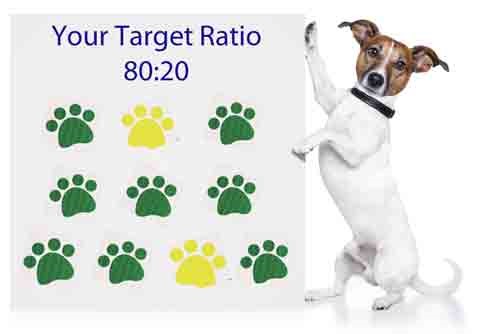 inexperienced your yellow dog percentage should be lower). This means that over 10 dog evaluation sessions 8 dogs will score green and 2 yellow. How close are you to that ratio today?
As you get closer to your goal you will see:
- Improved safety
- Easier to manage playgroups
- Fewer “difficult” conversations with existing clients
- Staff that enjoy supervising their groups.
Note that our percentage goal doesn’t include any red dogs. These dogs do not have the background or exhibit the behaviors to be a good fit into the social environment of group dog play.
When clients pay you for off-leash play services safety is your top priority and responsibility. “Red” dogs are high-risk in the play environment. Attempts at “special management” to allow them to participate is never 100% risk-free. Excellent operators will not subject their other clients’ dogs to this risk.
Don’t expect to make this change overnight as it has taken time for your playgroups to evolve to the dog mix you have today. That’s why we want you to start using the checklist with the new dogs you evaluate for acceptance into your groups. There is also value to objectively scoring the existing dogs in your playgroups. In a future post we will share a checklist and process to evaluate all playgroup dogs.