

Start with three moves this week: optimize your Google Business Profile, require rebooking at checkout, and post before-and-after photos consistently. Together they drive more immediate bookings and stronger retention within 30 days. Track weekly rebooking rate first. Once it climbs, everything else in your marketing gets easier and cheaper.
TL;DR:
- Prioritizing rebooking rate growth to at least 60 percent makes subsequent marketing efforts more cost-effective and sustainable.
- Filling out your Google Business Profile with detailed, specific information and posting weekly before-and-after photos significantly boosts local visibility and review acquisition.
- Streamlining online booking by including clear pricing, add-ons, and default recurrence options encourages repeat appointments and reduces booking friction.
- Automating email and SMS follow-ups, including review requests and rebooking reminders, helps maintain client engagement without manual effort.
- Building partnerships with local vets, trainers, and pet groups creates trusted referral channels that outperform paid advertising in steady client acquisition.
Table of Contents
- Grooming Marketing Ideas That Start With Your Google Business Profile
- Make Booking Frictionless: Site Pages and Online Scheduling
- Publish Before-and-After Photos and Short Transformation Videos
- Run Email and SMS Automations to Lock In Rebooking
- Design Low-Friction Referral and Loyalty Programs
- Build Partnerships and Community Presence for Steady Referrals
- Add Revenue With Packages, Add-Ons, and Gift Cards
- When and How to Use Paid Local Search and Social Ads
- Your 90-Day Playbook: What to Fix First and What to Track
- Templates and Staff Scripts to Speed Up Execution
- Why Retention Beats Chasing More Leads
- Put the 90-Day System on Autopilot With Thedoggurus
- Sources
Grooming Marketing Ideas That Start With Your Google Business Profile
Your Google Business Profile is the single highest-leverage piece of real estate you own, and most groomers leave it half-finished. Fill in every field: primary category, a services list with prices or ranges, your booking link, and accurate hours. Incomplete profiles rank worse and convert less, because Google (and pet owners) reward specificity.
From there, treat the profile like a live portfolio rather than a static listing.
- Post weekly before-and-after photos plus a few shots of your grooming space to build review-readiness
- Text a review link 2 to 4 hours after pickup, while the client’s dog still smells like shampoo and looks fantastic
- Respond to every review, good or bad, within a few days
This is the foundation the rest of your grooming advertising ideas build on. Skip it and you’re spending money to send traffic to a weak front door.
Make Booking Frictionless: Site Pages and Online Scheduling
A groomer’s website has one job: turn a curious visitor into a confirmed appointment before they change their mind. Service pages need prices or clear ranges, typical appointment length, and add-on options listed up top, not buried under paragraphs of brand story.
Online booking should capture contact details and ask for preferred recurrence right in the flow. That single field, “how often would you like to book,” is a quiet but effective grooming pricing strategy nudge. It normalizes the idea of a standing appointment before the first visit even happens.
- Add missed-call text-back so a ringing phone during a groom never becomes a lost lead
- Send an automatic confirmation and a reminder 24 hours out
- List add-ons (deshedding, nail grinding, teeth brushing) directly in the booking flow, not as an afterthought
Pro Tip: Set your online booking form to default to “every 6 weeks” instead of a blank field. Most clients won’t change a sensible default, and you’ve just built rebooking into the funnel itself.
Publish Before-and-After Photos and Short Transformation Videos
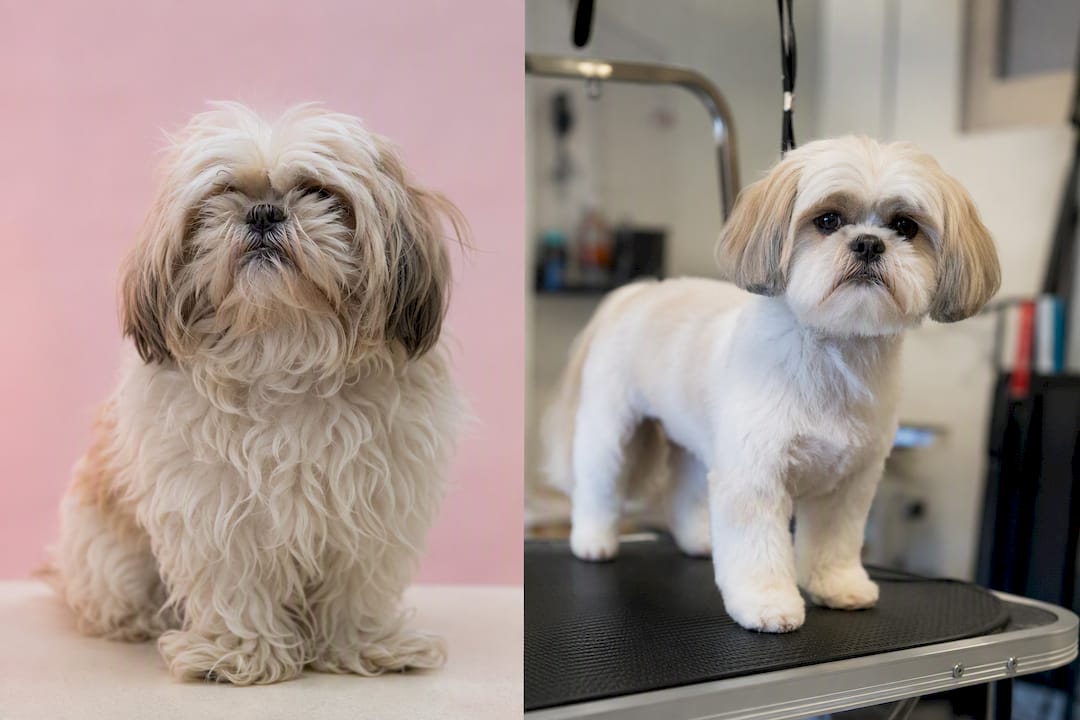
Pet content performs unusually well on social platforms because animals trigger a stronger emotional response than almost any other content category, according to a review of human-animal interaction research. That’s not a fluke of the algorithm. It’s a behavioral pattern you can build a content calendar around.
Three formats consistently outperform polished, overproduced content for local groomers:
- Split before-and-after images taken from the same angle in the same light
- 15 to 30 second time-lapse videos of a scruffy dog becoming a show dog
- Client-submitted photos and short clips, reposted with permission
If you run paid social, layer a tight geo-radius with breed and interest targeting rather than broad reach. A few practical rules keep the quality consistent: use the same camera position and lighting setup every time, and always get signed client permission before posting a dog’s photo. Our social media marketing guide covers content calendars if you need a starting structure.
Run Email and SMS Automations to Lock In Rebooking
Manual follow-up is where good intentions go to die. Automations remove that dependency and keep your grooming business marketing running whether you remember to send a message or not.
Build these four sequences once and let them run:
- A welcome message when a new client books their first appointment
- A post-groom text with the photo and a review link, sent 2 to 4 hours after pickup
- A reminder a few days before the next scheduled visit
- A rebooking prompt at checkout, followed by a reminder near the recommended interval if they haven’t rebooked
Keep promotional sends to about two per month. Clients tolerate transactional messages (appointment reminders, photo follow-ups) far better than a steady drip of offers, and overuse is the fastest way to get filtered into a spam folder.
Pro Tip: Send the post-groom photo text within the first few hours. Wait a day and the emotional high has faded; the review request lands flat.
Design Low-Friction Referral and Loyalty Programs
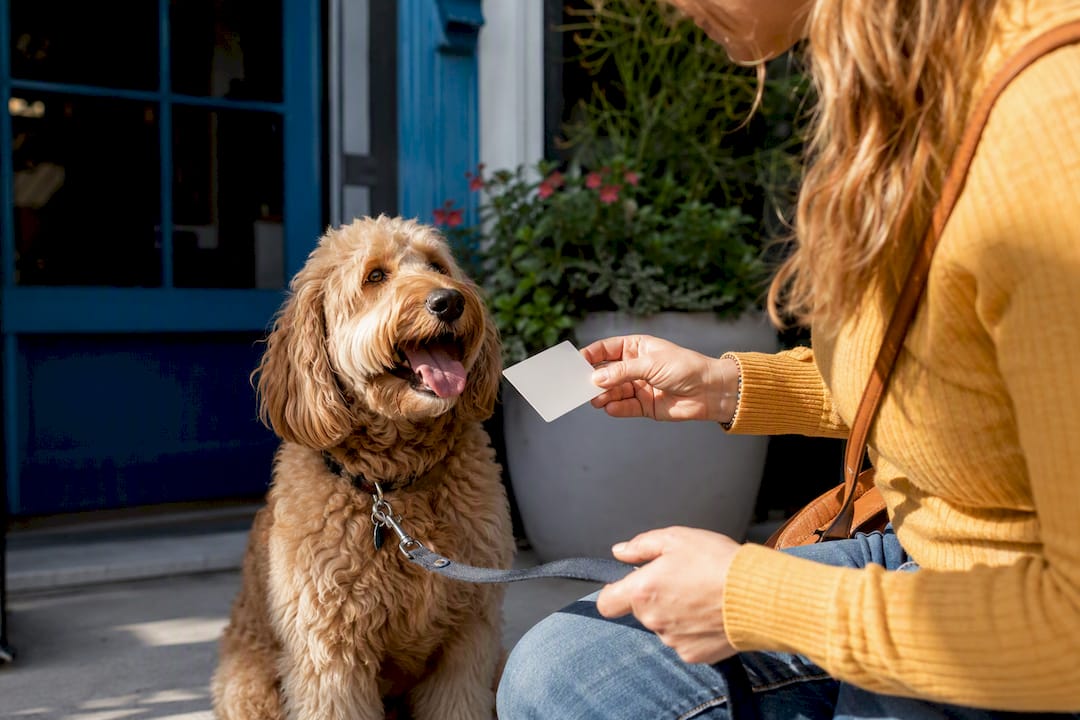
Word-of-mouth still drives a disproportionate share of new grooming clients, but only if you make referring easy and rewarding. A mutual credit structure, something like $10 off for the referrer and $10 off for the new client, applied automatically at checkout, removes the awkward “remind me to give you credit” step entirely.
Loyalty works on the same principle: reduce friction, automate the reward.
- Offer points per visit or a visit-count reward (the 6th groom is free or discounted)
- Make redemption automatic at checkout, not something the client has to request
- Give front-desk staff a short script: “Since you’re a regular, you’re two visits from a free nail trim”
Track two numbers monthly: referral conversion rate and reward redemption rate. If redemption is low, the program isn’t visible enough at the point of sale.
Build Partnerships and Community Presence for Steady Referrals
Vets, trainers, pet retailers, and rescue groups all talk to the same dog owners you want to reach, and none of them compete with you directly. A simple co-marketing arrangement, cross-promoted discounts, a shared flyer, a booth at their adoption event, generates warmer leads than most paid channels because the referral carries someone else’s trust.
Local events work the same way if you show up prepared. Bring a clear goal (bookings, not just brand awareness), a QR code linking straight to your booking page, and a staff member briefed to collect contact information rather than just hand out business cards. Follow up within 48 hours while the conversation is still fresh.
- Approach two or three local partners with a specific offer, not a vague “let’s collaborate”
- Track referrals per month by source, and conversion rate from partner-driven leads
- Revisit underperforming partnerships quarterly rather than letting them run on autopilot
Add Revenue With Packages, Add-Ons, and Gift Cards
Diversified revenue is one of the more reliable pet grooming promotion ideas because it grows your average ticket without requiring a single new client. Add-ons like deshedding treatments, dental cleaning, or specialty shampoo typically carry strong margins when priced correctly. Groomers who price purely by breed and coat length, without factoring in add-on time, tend to underprice by 15 to 30 percent.
- Bundle recurring visits into prepaid packages (a “5-groom pass”) to lock in future revenue and reduce no-shows
- Promote gift cards ahead of major holidays, when pet owners are already shopping for someone else’s dog
- Cross-sell add-ons at checkout and again in the post-groom follow-up email
Our guide to growing grooming revenue breaks down specific bundling structures if you want to build this out further.
When and How to Use Paid Local Search and Social Ads
Paid ads only work once your booking flow and tracking are solid. Send traffic to a slow, confusing site and you’re just paying to lose money faster. Start small: test with $300 to $500 a month, targeting intent keywords like “dog groomer near me” within a tight local radius rather than an entire metro area.
Creative should mirror what already performs organically, before-and-after images and short video, aligned to a landing page that goes straight to booking rather than your homepage. Effective grooming advertising leans on proof over polish; ad creative research for groomers consistently finds that simple transformation content beats heavily produced spots for local service businesses.
- Require call tracking and conversion tracking before you spend a dollar
- Run any test for at least 30 to 60 days before judging results
- Layer breed and interest targeting on top of your geo-radius rather than relying on radius alone
Pet industry spending has stayed resilient even as households tighten budgets elsewhere, according to research from the American Pet Products Association, which is exactly why retention-focused paid spend tends to outperform pure acquisition chasing.
Your 90-Day Playbook: What to Fix First and What to Track
Sequencing matters more than intensity. A grooming marketing system generally moves through four stages: get found, earn the click with proof, remove booking friction, then engineer rebooking, according to the framework SearchPod uses for service businesses. Trying to run paid ads before your booking flow works is the most common way groomers waste a marketing budget.
- Weeks 1 to 3: Complete your Google Business Profile, start weekly before-and-after posts, and set up the review-request text automation.
- Weeks 4 to 6: Rebuild service pages with clear pricing, integrate online booking with recurrence capture, and add missed-call text-back.
- Weeks 7 to 9: Train staff on the rebooking-at-checkout script, launch the loyalty program, and reach out to two local partners.
- Weeks 10 to 12: Test one paid channel (local search or Meta ads) with a $300 to $500 budget, and layer in a seasonal promotion or gift card push.
Your KPI dashboard should stay simple enough to check weekly without dread:
| Metric | What it tells you |
|---|---|
| Rebooking rate | Whether your retention system is actually working |
| Acquisition cost per new client | Whether paid spend is sustainable |
| Review velocity | Whether your reputation is growing month over month |
| Average ticket | Whether add-ons and packages are gaining traction |
Shift budget toward paid ads once rebooking rate stabilizes, not before. Seasonal spikes (spring shedding season, pre-holiday bookings) are the best moments to lean harder into promotions, since demand is already elevated and your ad dollars stretch further.
Templates and Staff Scripts to Speed Up Execution
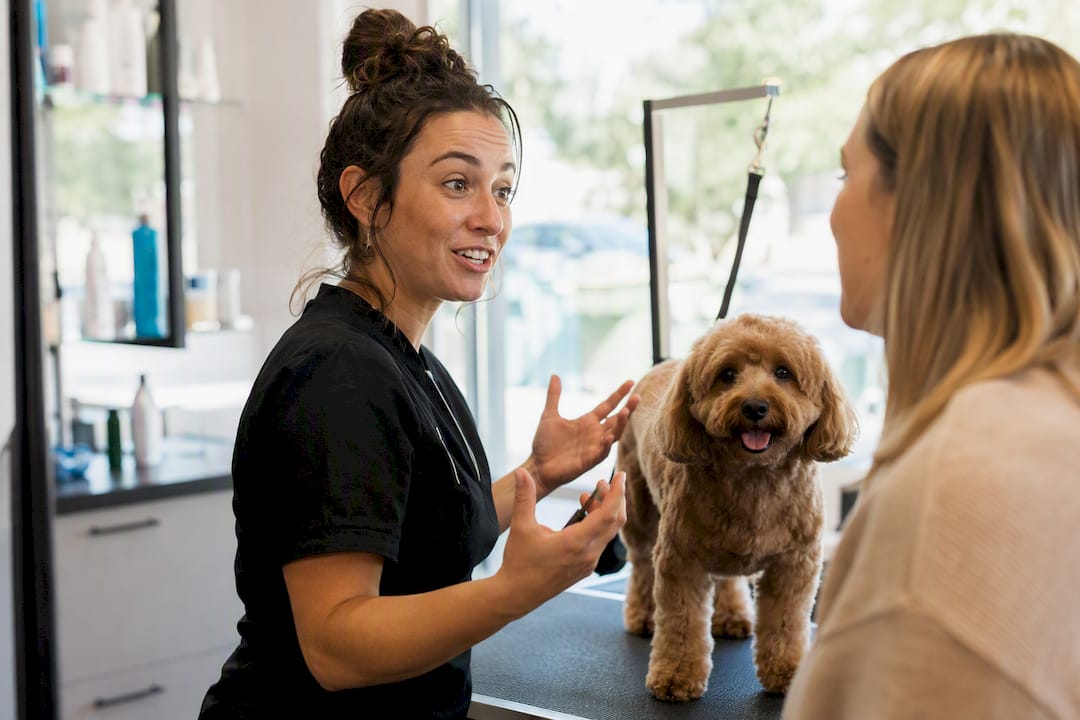
None of this works if your front desk doesn’t say the right thing at checkout. Here’s a rebooking script you can paste directly into your point-of-sale notes or train staff on this week:
“Based on [dog’s name]’s coat, I’d recommend coming back in 6 weeks to keep them looking this good. Want me to lock that in now?”
Pair it with a post-groom SMS template: “Here’s [dog’s name] looking fantastic! Loved working with you today. If you have 30 seconds, we’d appreciate a quick review: [link]. See you in 6 weeks!”
Getting staff to actually use scripts consistently is a training problem, not a marketing problem. Thedoggurus works with grooming teams on exactly this kind of adoption, through role-based staff training and coaching that treats a new routine like a habit to build, not a memo to ignore. Our team recruiting and training resources cover how to onboard groomers into systems like this without losing weeks to trial and error.
Why Retention Beats Chasing More Leads
The most common mistake I see grooming businesses make is spending real money on new-client ads while rebooking sits at 40 or 50 percent. That’s a leaky bucket problem, and no amount of acquisition spend fixes a leak. Fix the leak first.
The corrective is almost boring in its simplicity: make rebooking part of the checkout conversation, back it with an automated reminder, and measure it weekly like you would revenue. Groomers who do this consistently spend less on ads over time, not more, because their existing client base carries a bigger share of monthly revenue.
Pick one number this week: your current rebooking rate. Write it down. Set a target 10 points higher for 30 days out, then build the checkout script around hitting it.
— Oliver
Put the 90-Day System on Autopilot With Thedoggurus
Building all of this from scratch, scripts, automations, staff training, tracking, takes most grooming owners far longer than 90 days when it’s squeezed between actual grooming work. Thedoggurus exists to close that gap: instead of researching and building each piece yourself, you get the templates, coaching, and AI-powered tools already built for pet care businesses.
The Staff Products plan gives your team the rebooking scripts, review-request templates, and training modules covered here, plus AI tools that help you track rebooking rate and acquisition cost without building a spreadsheet from scratch. It’s built specifically for groomers, daycares, and pet sitting businesses running exactly this kind of system. If you’re ready to move faster than a solo build allows, check out Staff Products and see which tools fit your team this month.
Sources
The Square guide to grooming marketing covers foundational tactics like gift cards and loyalty programs. The SearchPod marketing system breaks down retention-first sequencing in more depth. The American Pet Products Association tracks broader industry spending trends worth watching.
- Human–animal interaction research (PMC review)
- 8 Pet Grooming Marketing Ideas — Square
- Pet grooming marketing system (SearchPod)