

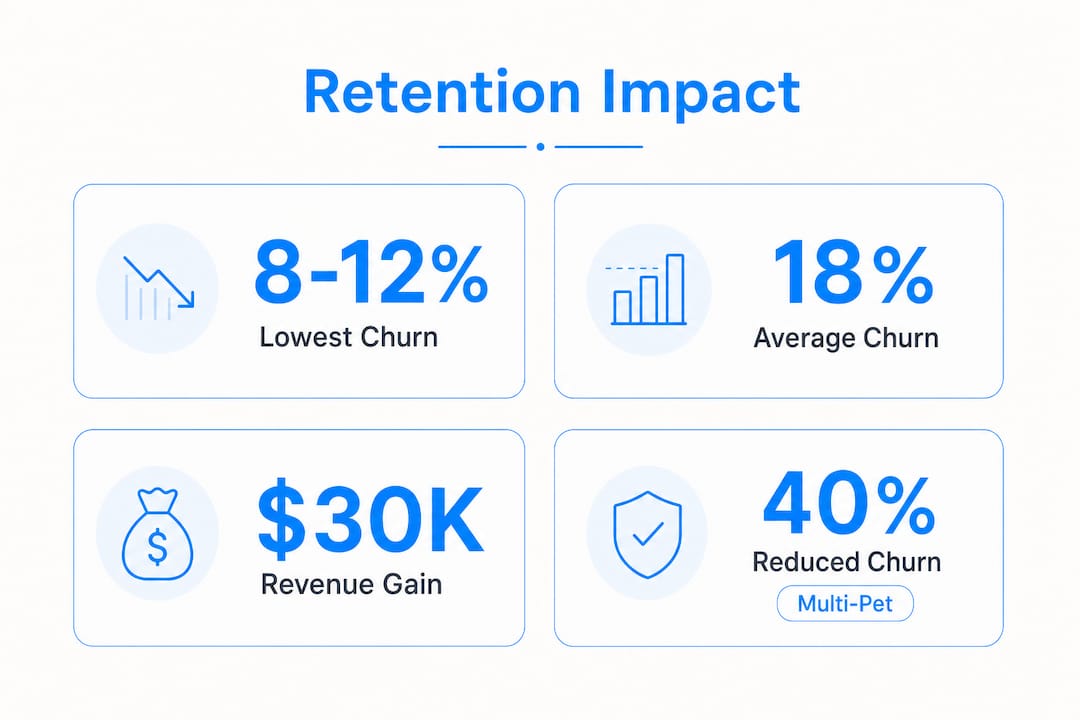
Pet retention programs are structured systems that keep pet care clients engaged, spending, and loyal through proactive communication, wellness plans, and personalized outreach. The average annual churn rate for companion animal practices sits at 18%, but top-performing businesses cut that figure to 8–12% with formal retention programs in place. That gap represents real revenue, real relationships, and real competitive advantage. If you run a dog daycare, boarding facility, grooming studio, or pet sitting operation, building a structured retention system is the single highest-return investment you can make this year.
What are the key components of pet retention programs?
Client retention in pet care is built on five core pillars. Each one works independently, but together they create a system that keeps owners coming back and pets in consistent care.
Multi-channel communication. Personalized, multi-channel outreach using SMS, email, and phone increases preventive care compliance to 78%, compared to 52% with manual reminders alone. SMS reaches 45% of pet owners most effectively, email reaches 30%, and phone calls reach the remaining 25%. Sending the right message through the right channel is not optional. It is the foundation of every other tactic.
Wellness and membership plans. Clients enrolled in wellness plans spend more and stay longer. A wellness plan case study showed that dedicated membership programs boosted total care spend by 75% and reduced voluntary churn to as low as 1.3%. That is not a rounding error. That is a business transformation. If you want to learn how to add one to your operation, Thedoggurus has a practical guide on adding a membership program to your pet business.
Personalization using pet data. Clients feel seen when you remember their pet’s birthday, breed-specific health milestones, or annual vaccination schedule. Client education content focused on pet-specific health tips reduces churn by 22% and builds long-term loyalty by positioning your business as a trusted partner, not just a vendor.
Client segmentation by risk level. Not every client needs the same outreach. Segment your client base into active, at-risk, and lapsed groups. Active clients need appreciation and upsell opportunities. At-risk clients need timely check-ins. Lapsed clients need a win-back campaign.
Win-back campaigns. Lapsed clients targeted at 90 and 180 days of inactivity can be recovered at rates of 15–30%. Most of them left because life got busy, not because they were unhappy. A well-timed message with a clear offer brings many of them back.
Pro Tip: Multi-pet households churn at 40% lower rates than single-pet households when you send consolidated reminders for all their pets. Build your communication system to recognize and group multi-pet families from day one.
How do pet retention programs reduce churn and increase revenue?

The financial case for client retention is direct. Keeping a client costs far less than replacing one. Every month without automated retention costs a typical practice 10–15 clients who could have been saved with timely outreach. Automated campaigns save $25,000–$55,000 annually in acquisition costs for practices that implement them.
The table below shows what the numbers look like across three performance levels.
| Performance level | Annual churn rate | Estimated annual savings vs. no program |
|---|---|---|
| No retention program | 18–28% | Baseline |
| Basic retention program | 12–18% | Moderate acquisition cost savings |
| Full wellness + automation | 1.3–12% | $25,000–$55,000 in acquisition costs |
The difference between the top and bottom rows is not luck. It is a system. Businesses that combine wellness plan enrollment with automated communication workflows consistently outperform those relying on front-desk reminders and word of mouth.
“Retention is an operational necessity, not a marketing tactic. Lack of proactive outreach is the primary cause of churn, not client dissatisfaction.”
That insight reframes everything. Most pet business owners assume clients leave because of price or a bad experience. The data says otherwise. Clients drift away because no one reached out. Building a system that reaches out automatically solves the real problem.
Converting passive retention into active loyalty also changes the revenue math. Clients enrolled in recurring revenue programs visit more often, spend more per visit, and refer more friends. The compounding effect of even a modest improvement in retention rate shows up clearly in annual revenue within two to three quarters.
How to implement pet retention programs in your business
Starting a retention program does not require a complete overhaul of your operations. A phased approach works best for most pet care businesses.
Assess your current churn rate. Pull your client data from the past 12 months. Count how many clients visited once and never returned. Count how many have not booked in 90 days. That number is your baseline churn rate, and it tells you exactly how much opportunity you are leaving on the table.
Segment your client list. Divide clients into three groups: active (booked in the last 60 days), at-risk (no booking in 61–90 days), and lapsed (no booking in over 90 days). Each group needs a different message and a different offer.
Build automated communication workflows. Set up triggered messages for appointment reminders, post-visit follow-ups, birthday greetings, and reactivation campaigns. Conditional workflow logic in automation platforms doubles response rates compared to generic messaging by delivering personalized sequences based on client history.
Launch a wellness or membership plan. Wellness plans are the single most effective retention tool in pet care. They create a financial and emotional commitment that keeps clients returning on a schedule. Thedoggurus offers resources on membership plan pricing to help you structure an offer that works for your market.
Integrate educational content. Send pet-specific tips, seasonal health reminders, and milestone messages between appointments. This positions your business as a resource, not just a service. Clients who learn from you trust you more and stay longer.
Monitor and adjust. Track open rates, booking rates after campaigns, and churn rate monthly. If a win-back campaign at 90 days is not converting, test a different offer or subject line at 60 days. Retention programs improve through iteration, not perfection.
Pro Tip: Combining wellness plan automation with retention messaging in a unified dashboard optimizes engagement across boarding, wellness, and preventive care. Look for platforms that handle both in one place rather than stitching together separate tools.
For veterinary practices specifically, veterinary SEO services can amplify retention efforts by keeping your business visible to existing clients searching for follow-up care online.
How retention programs support owners facing real challenges
Pet retention programs serve a purpose beyond business metrics. They help pet owners stay connected to care during difficult times, which keeps pets in their homes and out of shelters.
Temporary assistance programs are a powerful but underused retention tool. These programs offer short-term support such as food assistance, subsidized veterinary care, or behavior counseling to owners who might otherwise surrender their pets. Owner-supported rehoming strategies and financial assistance programs reduce shelter intake, keep pets in homes, and build deep community trust that no advertising budget can replicate.
Here is what a well-rounded owner support component looks like in practice:
- Food and supply assistance. Partner with local food banks or pet supply donors to offer short-term help to clients facing financial hardship.
- Behavior support referrals. Connect struggling owners with trainers or behaviorists before a behavior problem becomes a surrender reason.
- Flexible payment plans. Offer payment plans for veterinary or boarding services to reduce financial barriers to continued care.
- Rehoming support. When surrender is unavoidable, help owners find responsible placements rather than leaving them to navigate shelters alone.
- Educational resources. Share content on common challenges like separation anxiety, leash reactivity, or senior pet care to help owners feel capable and supported.
The business benefit of this approach is real. Owners who receive help during a hard moment become your most loyal long-term clients. They remember who showed up for them, and they tell their friends. Customer retention strategies that include empathy-driven touchpoints consistently outperform purely transactional approaches in building lasting loyalty.
Key Takeaways
Pet retention programs work because they replace passive hope with active, automated systems that reach clients at the right moment with the right message.
| Point | Details |
|---|---|
| Churn is preventable | Top businesses cut churn from 18% to 8–12% with formal retention programs. |
| Wellness plans drive revenue | Membership plans boost care spend by 75% and reduce churn to as low as 1.3%. |
| Automation saves money | Automated campaigns save $25,000–$55,000 annually in client acquisition costs. |
| Win-back campaigns work | Targeting lapsed clients at 90 and 180 days recovers 15–30% of lost clients. |
| Owner support builds loyalty | Temporary assistance programs keep pets in homes and turn struggling clients into loyal advocates. |
Why most pet businesses are solving the wrong retention problem
Most pet business owners I talk to think retention is a marketing problem. They want a better social media strategy or a new promotion. What they actually have is an operations problem. Clients are not leaving because your Instagram feed is boring. They are leaving because nobody called, texted, or emailed them after their last visit.
The businesses I have seen grow fastest are the ones that treat retention as a daily operational function, not a quarterly campaign. They have automated workflows running in the background every single day. They know exactly which clients have not booked in 60 days. They have a wellness plan that creates a recurring financial relationship with their best clients. They do not wait for clients to come back. They go get them.
The other thing most owners miss is the power of the owner support angle. Helping a client through a tough month, whether that means a payment plan, a behavior referral, or just a check-in call, creates a bond that no discount can replicate. The pet care businesses that will win the next decade are the ones that embed themselves into the ongoing life of the owner and pet, not just the appointment calendar.
The technology to do all of this exists right now. The frameworks are proven. What most businesses lack is the structure and the confidence to implement them consistently. That is exactly where focused coaching and the right tools make the difference.
— Oliver
How Thedoggurus helps you build a retention program that works
Running a pet care business is demanding. Building a retention system on top of daily operations can feel like one more thing on an already full plate.
Thedoggurus is built for exactly this situation. The platform combines expert-led courses, hands-on coaching, and AI-powered tools to help dog daycare, boarding, grooming, and pet sitting businesses implement the systems that actually reduce churn and grow revenue. From membership plan frameworks to operational playbooks grounded in real pet business experience, Thedoggurus gives you the structure to stop reacting and start building. Visit Thedoggurus to see how other pet business owners are turning retention into a reliable growth engine.
FAQ
What is a pet retention program?
A pet retention program is a structured system of communication, wellness plans, and personalized outreach designed to keep pet care clients engaged and reduce churn. Formal programs consistently cut annual churn rates from 18% down to 8–12%.
How do wellness plans improve client retention?
Wellness plans create a recurring financial and emotional commitment that keeps clients on a regular care schedule. One case study showed wellness plan members reduced voluntary churn to 1.3% while increasing total care spend by 75%.
How often should I contact lapsed clients?
Target lapsed clients at 90 days and again at 180 days of inactivity. Structured win-back campaigns at these intervals recover 15–30% of clients who would otherwise be permanently lost.
What is the fastest way to reduce churn in my pet business?
The fastest single action is launching automated post-visit follow-up messages combined with a 90-day reactivation campaign. Automation removes the human error of forgetting to reach out and keeps your business top of mind between appointments.
Do pet retention programs work for small businesses?
Yes. The core tools, including automated reminders, segmented email campaigns, and a basic membership plan, are accessible to businesses of any size. The financial return from retaining even a handful of additional clients each month typically covers the cost of any platform or program within the first quarter.