

When to Dismiss a Dog for Fighting
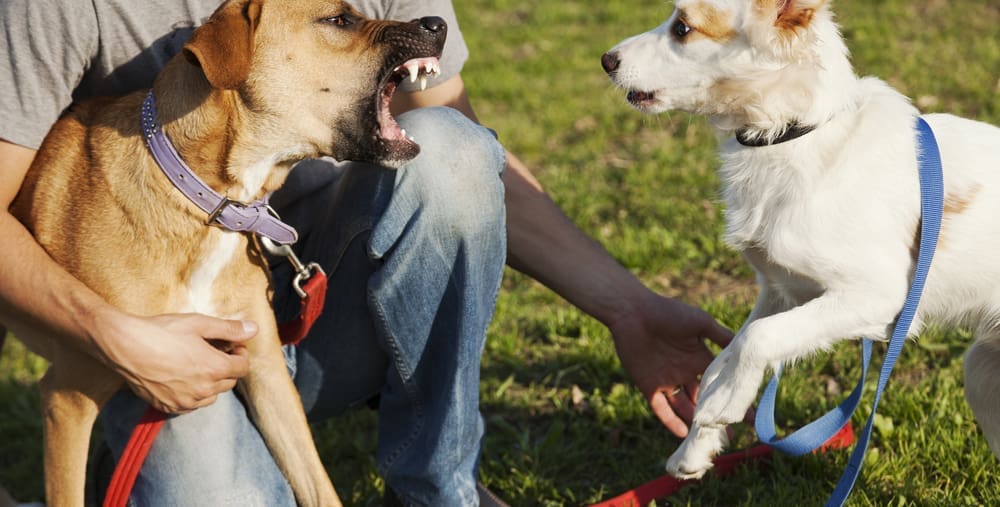
The Dog Gurus are often asked how many times a dog should be allowed to fight before getting dismissed from off-leash play. Is it realistic to have a “three strikes and you’re out” rule? Are there times when mitigating circumstances might be a reason to give the dog another chance? Should the dog be dismissed immediately? Keep reading to learn how to make these decisions at your facility.
When should you kick a dog out? Well, as with so many things regarding off-leash play, the answer is, “It depends.” This is an issue that can be very emotionally draining on the staff. It’s hard to make rational decisions when we have fallen in love with a particular dog. Often, staff members don’t like to face the truth that a dog isn’t a good fit in playgroups anymore than the owner wants to hear that reality. The more objective you can make the decision, the easier it can be on everyone.
Determining whether or not to revoke a dog’s play privileges after a dog fight/bite incident is a three-step process:
Step 1. Use this month’s Dog Incident Checklist and Assessment Instructions to objectively quantify the incident and the potential for future problems. This assessment is going to give you a classification of green, yellow, or red for the dog(s) involved. Obviously, a yellow or red classification will be a dog that has a higher chance of a repeated incident in playgroups. This should factor into your willingness to allow the dog to continue in playgroups.
Step 2. Use Ian Dunbar’s Dog Bite Scale to determine the level of a dog’s bite during any fight/bite incident. Dogs have an amazing ability to inhibit their bites. The best scenario is a fight in which no dog was injured (classified on the bite scale as a level 1 bite). Dogs with bites that are level 3 and above are much more of a risk during off-leash play.
Step 3. Ask yourself these two questions:
- Was the incident preventable? Talk with the staff, replay the video if you have it on camera, think about the day’s events, and honestly assess whether or not you could have prevented the incident. If the answer is “yes”, then additional staff training is warranted to prevent a repeat occurrence in the future. If the answer is “no” then the dog is at high risk of biting again in the future.
- If this happens again with the same dog, will I be able to tell the owner of any dog bitten that I didn’t know it was possible? To me, this is a key question that serves as a “gut check” on whether or not to revoke a dog’s play privileges. If a dog with a prior bite history injures a second dog, how will you justify that to an owner? You are responsible for every dog in your care and you have a responsibility to keep all the dogs safe from one another. If you can’t trust a dog and you know a serious bite is a strong possibility, I would not allow the dog to continue in off-leash play activities.
After going through this step by step process you should have a good idea about the relative risk you take in allowing a dog to continue in playgroups. Now it’s time to make some decisions based on the level of risk you are willing to accept.
Here are some basic rules of thumb I use when making these decisions.
- A dog that is classified as red on the Dog Incident Checklist will most likely be dismissed. There are often too many warning signs for me to accept the risk of keeping the dog in playgroups.
- Dogs with level 3 bites and above will be dismissed from playgroups. This indicates a dog with bite inhibition that is not as strong as I would like. Although the next bite might be lower, I don’t want to take the risk.
- If my staff expresses any concern that they cannot trust a dog, the dog will most likely be dismissed. I value gut instincts even if the staff can’t always explain exactly what is going on with the dog. I also value my staff’s opinions and will work hard to empower them to make decisions. I have never regretted dismissing a dog. I have often regretted ignoring my staff’s gut instincts recommending that a dog be dismissed.