

Every dog daycare needs one non-negotiable rule: require rabies, DHPP (distemper, adenovirus, parvovirus, parainfluenza), and Bordetella before a dog ever sets paw in your play yard, and add canine influenza or leptospirosis if either is active in your region. Proof has to come from a licensed veterinarian, not a memory or a text message.
Here’s your top-3 verdict, in order of priority:
- Rabies. Legally required in all 50 states and the one universal non-negotiable across every kennel and daycare policy.
- DHPP/DA2PP. Your core combination vaccine protecting against the diseases most likely to spread fast and hit hard in a group setting.
- Bordetella. Effectively mandatory in any group-play environment, since kennel cough moves through a play yard faster than almost anything else you’ll encounter.
Act on this today: refuse entry to any dog without vet-supplied proof, isolate anything showing a cough or nasal discharge, and log every vaccine check at the front desk before the leash comes off.
Key Takeaways
A daycare vaccination policy works only when required vaccines, verification steps, and enforcement scripts are documented, consistently applied, and reviewed annually with a veterinarian.
| Point | Details |
|---|---|
| Set your core requirement | Require rabies, DHPP, and Bordetella at minimum; add influenza or leptospirosis where regionally indicated. |
| Respect wait periods | Enforce minimum timing after vaccination, from about 7 days for intranasal Bordetella to 2 weeks after core series completion. |
| Verify, don’t trust | Accept only clinic-issued proof or direct vet confirmation, never owner-reported history alone. |
| Loop in your vet annually | Formalize a medical advisor statement and revisit the policy each year based on local disease trends. |
| Use built templates | Thedoggurus offers intake forms, training modules, and coaching to roll out enforcement without building it from scratch. |
Table of Contents
- Which Vaccines Should a Daycare Vaccination Policy Require?
- How Do You Verify Vaccination Records at Drop-Off?
- Should You Involve Your Veterinarian in Policy Design?
- How Do You Enforce Vaccination Rules Without Confrontation?
- What’s the Response Plan When a Contagious Illness Shows Up?
- How Should You Handle Puppies and Medical Exemptions?
- Ready-to-Use Vaccination Policy Checklist and Templates
- Implement Your Vaccination Policy Without the Admin Headache
- Frequently Asked Questions
- Sources
Which Vaccines Should a Daycare Vaccination Policy Require?
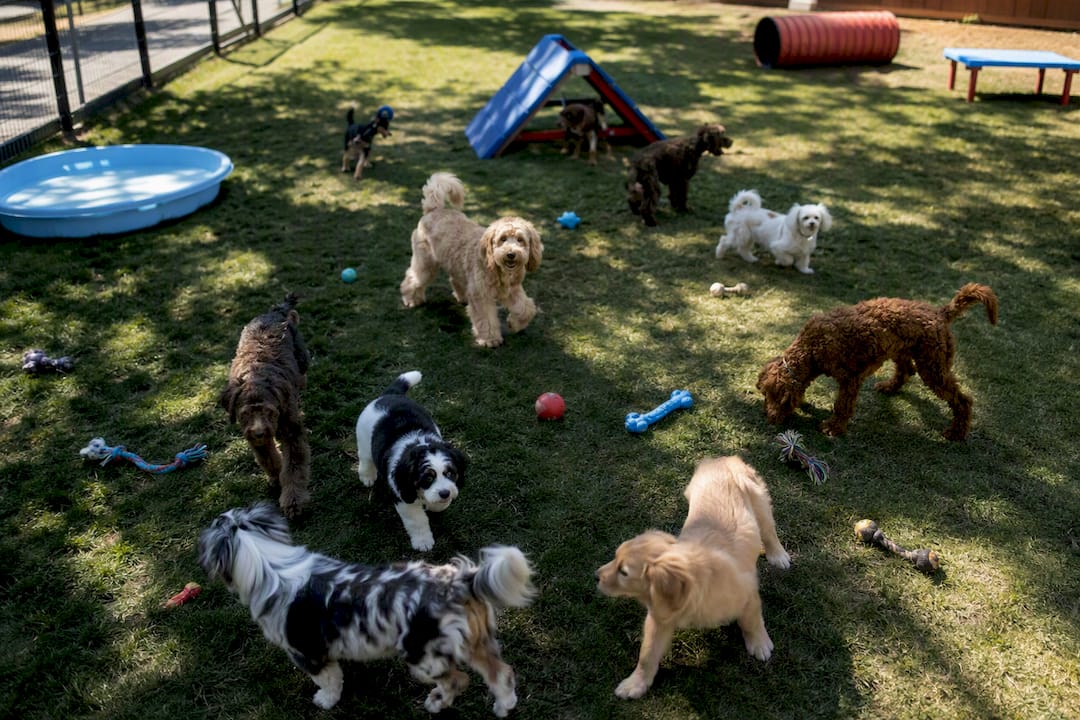
Your baseline should mirror what the AAHA canine vaccination guidelines classify as core: rabies and the DHPP combination covering distemper, adenovirus (hepatitis), parvovirus, and parainfluenza. These aren’t optional extras. They protect against diseases that spread through shared water bowls, turf, and close contact, which describes your entire building.
Bordetella and canine influenza sit in a different category technically, but not practically. AAHA and WSAVA guidance treats these as “core for lifestyle.” A dog that never leaves its backyard might skip them. A dog entering your daycare five days a week cannot. Add leptospirosis to your required list if you operate somewhere with standing water, wildlife exposure, or a known local caseload. Regional risk should drive this call, and your local vet can tell you whether lepto belongs on your mandatory list.
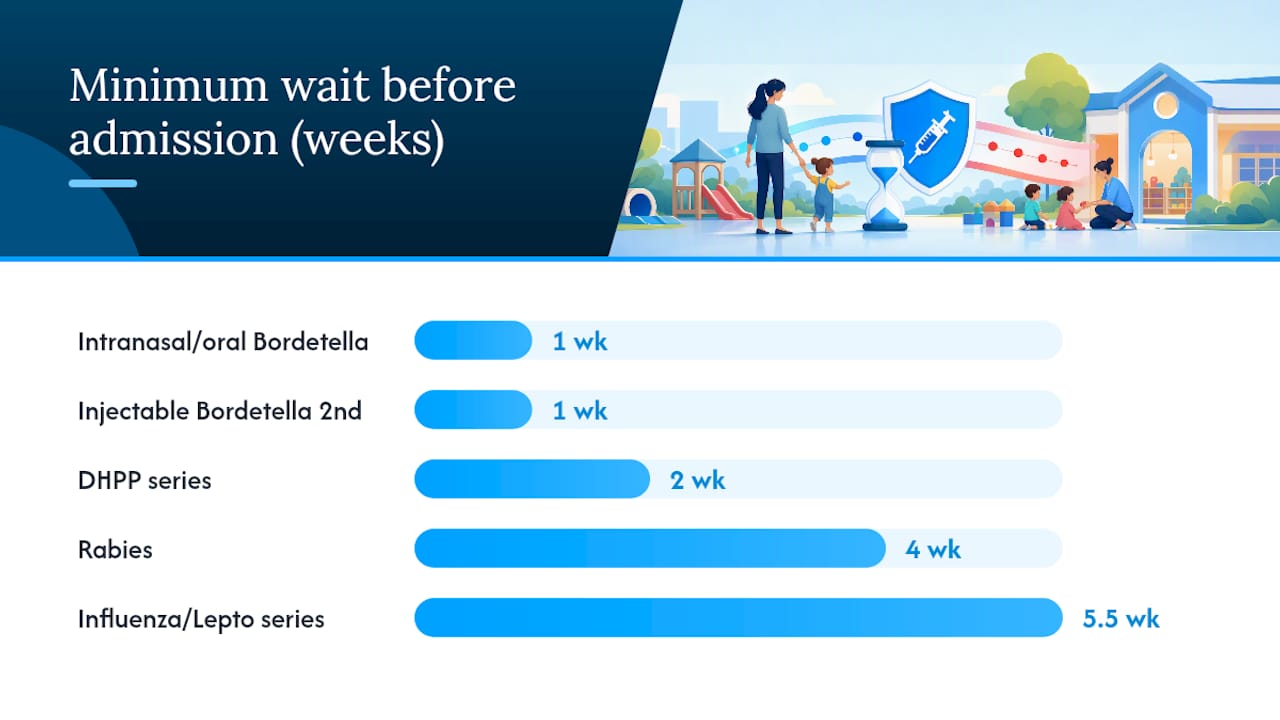
Timing matters as much as the vaccine itself. A dog vaccinated yesterday isn’t protected today.
| Vaccine | Minimum wait before admission |
|---|---|
| Rabies | Immunity typically considered established starting 28 days after initial dose (per most state/local rules); check your jurisdiction |
| Intranasal/oral Bordetella | About 7 days after a single dose |
| Injectable Bordetella (series) | About 1 week after the second dose in the two-dose series |
| DHPP core series | Two weeks after series completion, per Merck Animal Health boarding recommendations |
| Canine influenza / leptospirosis (two-dose series) | Doses 3–4 weeks apart, then 2 weeks after the final dose |
Puppies deserve their own lane. A puppy still mid-series shouldn’t join general population play, but a dedicated puppy socialization group with tighter screening and smaller ratios can be a reasonable middle ground while the vaccine series finishes. Check our group play safety standards for how to structure that separation.
How Do You Verify Vaccination Records at Drop-Off?
Owner-reported vaccine history is not proof. It’s a starting point for a conversation, and nothing more. The gold standard is clinic-issued documentation: a certificate, a printed record, or direct confirmation from the veterinary clinic itself. A handwritten note from the owner does not meet that bar, no matter how sincere it looks.
Your front-desk checklist should capture:
- Vaccine name and date administered.
- Lot number or clinic reference, when available.
- The veterinarian’s name and clinic phone number.
- Staff initials confirming the record was reviewed in person.
Acceptable proof looks like a clinic-generated certificate, a digital export from a veterinary portal, or a same-day phone confirmation from the clinic. Unacceptable proof includes a photo of a fridge magnet, a verbal “he’s up to date,” or a record for a different dog entirely, which happens more often than you’d think.
Store every record somewhere retrievable, not buried in a filing cabinet nobody opens. Local licensing inspections often ask for these on short notice, and a messy system creates real liability during a surprise visit. Audit your files quarterly, minimum, to catch expirations before they catch you.
Should You Involve Your Veterinarian in Policy Design?
Yes, and not as a formality. Veterinary Practice News has documented how much kennel vaccine policies vary from one operator to the next, with rabies as the only truly uniform requirement. That variability is exactly why a local vet partnership matters: they know what’s circulating in your area right now.
Ask your veterinary advisor:
- What’s the current local risk for leptospirosis, canine influenza, or parvovirus outbreaks?
- Do you prefer intranasal, oral, or injectable Bordetella for group-care dogs?
- What waiting periods do you recommend after each vaccine type?
- At what point should we tighten admission criteria during a local health alert?
Ask that same vet to sign a short medical advisor statement explaining the clinical reasoning behind your policy. It’s worth its weight during a licensing review or an insurance dispute. Revisit the whole policy annually, and sooner if a regional outbreak alert comes through.
How Do You Enforce Vaccination Rules Without Confrontation?
Enforcement lives or dies at the front desk, and your staff needs a script, not just a rulebook.
- Ask for proof before the leash comes off. “We’ll just need your vet’s confirmation on file before he joins the group today.”
- Handle missing records calmly. “We don’t have current Bordetella on file. We can hold his spot while you send it over from your vet, or reschedule for tomorrow.”
- Escalate expired records to a manager. Front-line staff shouldn’t be negotiating exceptions alone.
Your training checklist should cover verification steps, basic symptom screening (cough, discharge, lethargy), and a clear chain of command: who’s the on-call manager, and who’s the backup veterinary contact if something looks off.
Build a denial protocol into your enrollment contract. First refusal, a short grace period with a list of quick-vaccination clinics nearby, then a documented warning if the pattern repeats. Contract language that spells this out in advance saves you an argument in the moment. Our post on avoiding fights and bites covers a similar consistency principle for behavioral incidents.
What’s the Response Plan When a Contagious Illness Shows Up?
Speed matters more than perfection here.
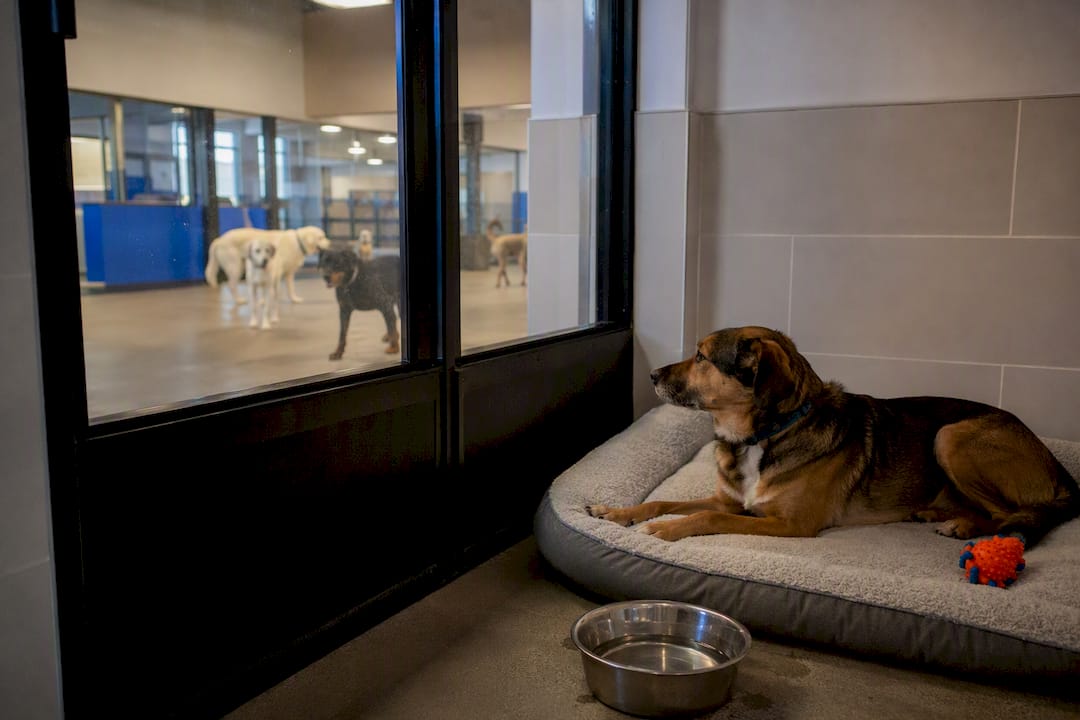
- Isolate immediately. Any dog showing a cough, nasal discharge, vomiting, or lethargy gets pulled from the group the moment it’s noticed.
- Notify and escalate. Contact the owner, then your medical advisor, to confirm next steps and whether other attendees need monitoring.
- Increase cleaning and surveillance. Step up disinfection frequency across shared surfaces for the following 48 to 72 hours.
- Set a return timeline. During active leptospirosis or canine influenza concerns, recovered dogs should complete at least 14 days of any prescribed antibiotic treatment for lepto, and influenza cases can remain contagious for up to 28 days after symptom onset.
Pro Tip: Keep a short, factual owner notification template ready year round. When you have to send it, you’ll want to be editing details, not writing from scratch under pressure.
Restrict new admissions temporarily if a suspected outbreak is spreading faster than isolation can contain it. That’s a hard call, but a short pause beats a facility-wide shutdown two weeks later.
How Should You Handle Puppies and Medical Exemptions?
Puppies need a clear line: most facilities set general daycare admission at completion of the core series plus the required wait period, with a supervised puppy group as the option before that milestone.
Medical exemptions require documentation, not a verbal claim. Ask for a vet-signed letter explaining the medical reason and any recommended precautions.
- Require a written, vet-signed exemption plan for any dog not fully vaccinated for medical reasons.
- Offer private play sessions or reduced-group alternatives instead of general population admission.
- Consider limited supervised sessions for partially vaccinated dogs mid-series, paired with a documented vet plan.
- Reassess exemptions periodically. Medical situations change.
Ready-to-Use Vaccination Policy Checklist and Templates
Paste this into your handbook and adjust the specifics to match your region and your veterinarian’s guidance:
- Required vaccines: rabies, DHPP, Bordetella, plus canine influenza and/or leptospirosis where regionally indicated.
- Timing rule: all vaccines must meet minimum wait periods (see the table above) before first admission.
- Verification step: clinic-issued proof only, checked and logged by staff at every new enrollment and renewal.
- Staff responsibility: front desk verifies and records; managers handle exceptions and denials.
- Enforcement step: documented grace period, then denial, tied to your enrollment contract language.
Templates worth keeping on hand: a drop-off verification form, an owner notification email for missing or expiring records, a short list of nearby quick-vaccination clinics you can hand to owners on the spot, and a one-page medical advisor statement your vet can sign.
On rollout, don’t flip the switch overnight. Train staff on the verification checklist first, run it for two weeks alongside your existing process, then go fully live. A digital tracking system reduces the risk of accepting expired or forged records far more reliably than a paper binder, and it’s worth the switch even for a smaller facility. Pair vaccine enforcement with year-round flea, tick, and heartworm prevention requirements, and consider recent fecal testing for dogs with any GI history, since shared play areas amplify parasite transmission the same way they amplify respiratory illness.
A Note From an Operator’s Chair
The single habit that moved our compliance numbers the most wasn’t a stricter rule. It was requiring vet confirmation before a dog’s very first visit, not after. Chasing paperwork retroactively never works as well as blocking the gap up front.
Pro Tip: Automated renewal reminders sent two weeks before a vaccine expires catch most lapses before they become a drop-off argument.
Implement Your Vaccination Policy Without the Admin Headache
Thedoggurus gives you the templates and training your team needs to enforce a vaccination policy consistently, without building every form and script from scratch. Our platform includes ready-to-use intake and verification templates, staff training modules covering symptom screening and denial scripts, and coaching to help you roll out the policy without a rocky first month.

That means fewer forged or expired records slipping through, less time spent chasing paperwork, and a documented system you can point to if licensing or an insurer ever asks how you handle vaccination compliance. If your current process still runs on memory and sticky notes, it’s worth seeing what a structured system looks like. Visit the Thedoggurus owner products page to explore the templates and training built specifically for this rollout, or head to Thedoggurus to request a demo and see the verification workflow in action.
Frequently Asked Questions
What vaccines should a daycare vaccination policy require at minimum?
Rabies, DHPP (distemper, adenovirus, parvovirus, parainfluenza), and Bordetella form the baseline. Add canine influenza or leptospirosis where your region’s disease activity warrants it.
How long after vaccination can a dog enter group daycare?
It depends on the vaccine. Intranasal Bordetella needs about 7 days, injectable Bordetella needs about a week after the second dose, and core combination vaccines generally need two weeks after series completion.
What proof of vaccination should daycares accept?
Clinic-issued certificates, digital exports from a veterinary portal, or direct phone or email confirmation from the clinic. Owner-reported history or handwritten notes don’t meet the standard.
Can a daycare accept a dog with a medical vaccine exemption?
Yes, with a vet-signed letter documenting the medical reason and a risk-assessment plan. Many facilities offer private play sessions instead of general group admission for these dogs.
How often should a vaccination policy be reviewed?
At least annually, with input from your veterinarian, and sooner if a regional outbreak alert changes local risk levels.
Sources
- 2022 AAHA canine vaccination guidelines — recommendations for core and noncore canine vaccines
- Leptospirosis and Canine Influenza guidance for congregate facilities — Los Angeles County VPH
- Working with kennel vaccine policies — Veterinary Practice News
- Kennel and boarding safety recommendations — Merck Animal Health (VetFolio consensus summary)