State and local governments regulate dog daycares in the United States, not the federal government. Federal oversight through USDA/APHIS applies only in narrow situations, like regulated transport, animal sales, or exhibition, so most daycare businesses never touch federal licensing at all.
Your single first move: confirm how your city or county actually classifies “dog daycare.” Many municipal codes were written before daycare existed as a business model, so your local planning department may file you under “kennel,” “boarding facility,” “animal services,” or something else entirely. That classification determines your entire permit path, so get it in writing before you sign a lease or order a single kennel panel.
Before you request that written interpretation, gather a few things:
- Your intended service model (daycare only, or daycare plus overnight boarding)
- The proposed address and confirmation the lease allows animal-related commercial use
- A basic facility layout showing indoor and outdoor space, entry points, and separation areas
Pro Tip: Call your local planning office and ask specifically for a “zoning determination letter” or “use interpretation” in writing. A verbal “that should be fine” from a staffer means nothing if an inspector disagrees six months later.
Table of Contents
- Understanding Dog Daycare Regulations: Federal, State, and Local Roles
- What Regulators Actually Require: A Compliance Checklist
- State Rules in Practice: Iowa, Massachusetts, and Beyond
- How to Find the Exact Rules That Apply to You
- A Realistic Timeline for Opening or Auditing a Compliant Facility
- Certifications That Reduce Your Regulatory Risk
- Red Flags That Trigger Fines, Citations, or Lawsuits
- Where to Find Templates and Primary-Source Documents
- Insurance Requirements Every Dog Daycare Needs
- Staff Training and Certification Standards
- Legal Liabilities Unique to the Daycare Business Model
- Waste Management and Environmental Rules for Pet Facilities
- Where Dog Daycare Regulation Is Headed Next
- How Thedoggurus Helps You Stay Audit-Ready
- Key Takeaways: Your First 30, 90, and 180 Days
- Frequently Asked Questions
- Sources
Understanding Dog Daycare Regulations: Federal, State, and Local Roles
Dog daycare regulations in the United States function as a three-tier system, and the tiers do not carry equal weight. Local government carries most of the practical burden. State government sets the ceiling or floor for certain standards. Federal government mostly stays out of it.
USDA/APHIS oversees minimum space requirements for dogs in regulated commercial contexts, but that guidance applies primarily to breeders, dealers, exhibitors, and research facilities under the Animal Welfare Act. An ordinary daycare operation that simply supervises off-leash play generally falls outside that jurisdiction entirely. If your business model shifts toward regulated sales, interstate transport, or exhibition, that changes. For a standard daycare and boarding operation, federal rules are rarely the gating factor.
States split into two camps. Some, like Iowa, have explicit administrative code sections that name “dog day care” as a defined activity with its own facility and staffing rules. Others rely almost entirely on general commercial kennel statutes, animal cruelty codes, or nothing daycare-specific at all, pushing the real regulatory weight down to the municipal level.
That local level is where most operators actually get stopped or slowed down:
- Zoning and planning departments decide whether your address permits an animal-care business, and under which use category.
- Building and fire departments inspect for occupancy, ventilation, egress, and fire suppression requirements tied to your square footage and dog count.
- Animal control or county health departments frequently issue the kennel or animal-facility permit itself, separate from your general business license.
- City or county clerks issue the basic business license, which does not substitute for any of the above.
Here’s the number that surprises new operators most: in states without daycare-specific statutes, there may be zero state-level requirements written for your business type, which means the entire regulatory relationship runs through a municipal code that was likely drafted for boarding kennels or veterinary clinics decades before daycare existed as a concept.
What Regulators Actually Require: A Compliance Checklist
Regulatory language varies by state, but the substance of what inspectors and licensing boards look for is remarkably consistent nationwide. Four categories cover nearly everything you’ll encounter.
Facility standards govern the physical space. Expect requirements or strong best-practice expectations around minimum square footage per dog, separation between indoor and outdoor areas, adequate ventilation and temperature control, isolation space for sick or injured dogs, and secure fencing with appropriate surfaces for cleaning and traction.
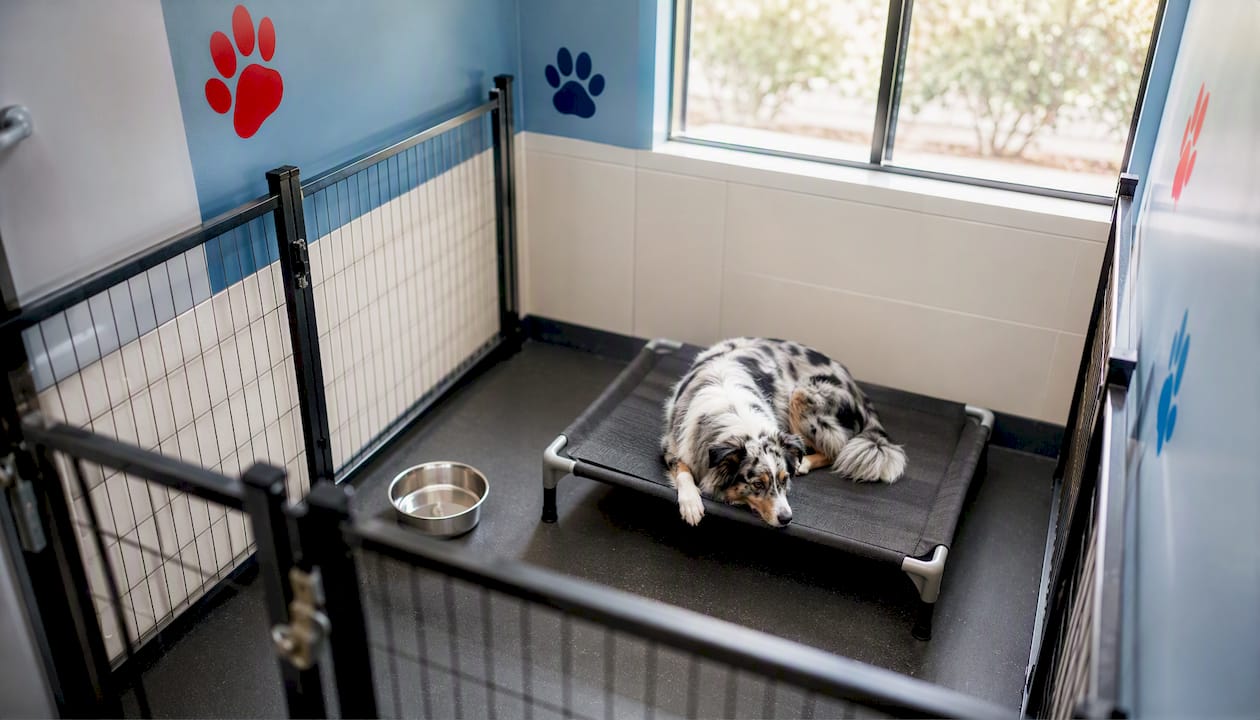
Operational rules cover how the business runs day to day. This includes playgroup size limits, staff-to-dog supervision ratios, pre-entry temperament screening for new dogs, proof of current vaccinations, documented medical histories, an emergency veterinary arrangement, and food handling protocols if you feed on-site.
Sanitation and health protocols address disease control. Cleaning schedules, pest control contracts, isolation procedures for sick animals, vaccination exemption handling, and waste disposal all typically require documentation, not just practice.
Recordkeeping and reporting ties it together. Intake records, incident and injury logs, inspection reports, and permit renewal paperwork need a home. Some states, following Massachusetts’ lead, now mandate injury reporting as a matter of law rather than best practice.
| Requirement Category | What Inspectors Typically Check |
|---|---|
| Facility space | Square footage per dog, indoor/outdoor separation, isolation area |
| Staffing | Supervision ratios, continuous visual/auditory contact during play |
| Health screening | Vaccination proof, temperament testing, medical intake records |
| Sanitation | Cleaning logs, pest control documentation, waste handling procedure |
| Recordkeeping | Incident logs, permit renewal dates, inspection history |
Building this checklist into your daycare operational standards before you ever face an inspector saves you from scrambling later.
State Rules in Practice: Iowa, Massachusetts, and Beyond
Two states illustrate opposite ends of the regulatory spectrum, and both are worth reading closely if you want to understand where your own state might be headed.
Iowa’s administrative code takes the most specific approach in the country. The rule defines “dog day care” outright and attaches hard numbers to it: a minimum of 75 square feet of play area per dog, a limit on playgroup size to maintain manageable groups, and dedicated staff assigned to each playgroup to maintain close supervision. The rule also requires temperament screening before a new dog enters group play, separation of incompatible dogs, documented isolation procedures for sick animals, and a veterinary arrangement on file. Public indexes like the Cornell Legal Information Institute reproduce this rule text, making it easy to reference the exact language during an application.
Massachusetts moved in a different direction after a widely covered safety incident. “Ollie’s Law,” formally House Bill 4919, was signed in October 2024 and works differently than Iowa’s approach: rather than dictating exact square footage, it requires every municipality to license kennels and daycares, mandates reporting of injuries to people or animals, and directs the Massachusetts Department of Agricultural Resources to adopt statewide operational and safety regulations. Capacity limits get set locally based on staffing and available accommodations rather than a single statewide number. The official chapter text is filed as Chapter 213 of the Acts of 2024.
Ollie’s Law represents something operators everywhere should watch closely: a state moving from silence on daycare safety to mandatory injury reporting and municipal licensing in direct response to a single high-profile case. That kind of legislative shift can happen fast, and it tends to happen after incidents, not before them.
California layers state health and safety code provisions on top of local ordinances, particularly around sanitation and public health, though the state has no single daycare-specific statute comparable to Iowa’s. Provisions under the California Health and Safety Code can apply to animal-care facilities depending on how local health departments interpret them, which means two California cities can enforce meaningfully different standards on businesses a few miles apart.
That range, from Iowa’s numeric specificity to states with almost no daycare-specific language at all, means you cannot assume your neighboring state’s rules apply to you, or that “no state rule” means “no rule.” It usually just means the rule lives in your municipal code instead.
How to Find the Exact Rules That Apply to You
Finding your governing rules is a sequential search, not a single Google query. Work through it in this order:
- Search your state department of agriculture or animal services website for terms like “commercial kennel,” “animal boarding,” “dog day care,” or “animal activity license.” States that regulate daycare specifically usually publish it there.
- Search your county or city municipal code using the same terms, plus “conditional use permit” and “animal facility.” Most municipal codes are hosted through services like Municode or American Legal Publishing and are searchable by keyword.
- Contact your local planning or zoning department directly and ask which zoning district your address sits in, and whether “animal daycare” or “commercial kennel” use is permitted there outright, permitted conditionally, or not permitted at all.
- Contact building and fire departments to learn occupancy classification requirements tied to your dog count and square footage, since these often dictate costly retrofits.
When you request a written interpretation, be specific in your wording. Ask: “Please confirm in writing whether a commercial dog daycare and boarding facility, with [X] dogs on-site and [Y] square feet, is a permitted use at [address] under the current zoning classification.” Vague requests get vague answers.
A few practical notes on reading what you find:
- Older codes almost never use the word “daycare.” Search for “kennel,” “boarding,” and “animal activities” instead.
- If you can’t locate a state-level rule, that’s information too. It tells you your municipal code carries the full weight of regulation.
- Save PDF copies and screenshot dates whenever you find governing text online. Codes get updated, and you want proof of what applied when you applied.
A Realistic Timeline for Opening or Auditing a Compliant Facility
Compliance work breaks cleanly into three phases, and skipping the order tends to cost operators money in retrofits they didn’t need to make.
Days 1 through 30 are about confirming ground truth. Get your written zoning determination. Start a relationship with a local veterinary practice for your emergency arrangement. Pull together intake and temperament-screening templates. Confirm your lease explicitly permits animal-related commercial use, not just “general commercial.”
Days 30 through 90 move into physical and administrative preparation. Schedule building and fire inspections. Submit any state-level kennel or facility license application if your state requires one. Begin staff training in pet first aid and CPR. Build out your intake and screening workflow so it’s operational before your first customer walks in.
Days 90 through 180 finalize the system. Complete any outstanding retrofits flagged during inspection. Assemble your renewal calendar so no permit lapses unnoticed. Audit your staff-to-dog ratios during actual peak hours, not projected ones, and adjust scheduling accordingly.
| Cost Category | What It Typically Covers |
|---|---|
| Permit and license fees | Municipal business license, kennel/animal-facility permit, state registration if applicable |
| Inspection-driven retrofits | HVAC upgrades, fencing changes, drainage or flooring adjustments |
| Veterinary partnership | Emergency care agreement, on-call arrangement, discounted service terms |
| Insurance premiums | General liability, professional liability, care/custody/control coverage |
| Staff certification | Pet first aid/CPR courses, initial behavior or handling training |
Pro Tip: When scheduling your building and fire inspection, ask the inspector directly what scope they’re evaluating before the visit. Some inspectors will walk through your intended layout with you informally first, which can flag a cheap fix before it becomes an expensive failed inspection.
Document your emergency veterinary agreement in writing, not as a handshake arrangement. Inspectors and licensing boards increasingly want to see a signed agreement specifying response times and after-hours contact, not just a name and phone number on a bulletin board.
Certifications That Reduce Your Regulatory Risk
When state rules stay minimal, as they do in most of the country, voluntary certification becomes your strongest substitute for missing regulatory structure. Regulators, insurers, and customers all read credentials as a proxy for competence when the law itself doesn’t specify one.
Three organizations carry the most weight in the daycare and boarding space. The International Boarding & Pet Services Association (IBPSA) offers operational and safety-focused credentials aimed squarely at facility owners and play supervisors. The Certification Council for Professional Dog Trainers (CCPDT) issues the CPDT-KA credential, widely recognized for trainers and staff working directly with behavior modification. The International Association of Animal Behavior Consultants (IAABC) certifies at a higher tier, generally reserved for staff handling complex behavioral cases or aggression assessments.
Match the credential to the role rather than requiring the same certification across your whole team:
- Entry-level play supervisors should hold pet first aid and CPR certification at minimum, before they’re ever alone with a playgroup.
- Lead play supervisors benefit from IBPSA credentials or CPDT-KA certification, since both address group dynamics and safety protocols specifically.
- Behavior specialists handling intake screening or problem behaviors should carry IAABC-level credentials, given the liability tied to misjudging a dog’s temperament.
Most of these credentials require renewal every one to three years, with continuing education hours attached. Budget for that renewal cost and staff time the same way you budget for insurance, because it lapses just as quietly if nobody tracks it.
Keep certification records in your operations manual, with expiration dates flagged well before they lapse. When a municipal licensing board or inspector asks about staff qualifications, pulling up a current, organized certification file does more for your credibility than any verbal assurance could.
Red Flags That Trigger Fines, Citations, or Lawsuits
Most compliance failures trace back to a handful of repeat mistakes, and nearly all of them are preventable with better paperwork habits.
Mistaking a business license for an animal-facility permit ranks as the single most common error. A business license does not authorize animal-facility use by itself; that permit usually comes from a separate department entirely, often animal control or county health, and requires its own application with facility schematics and staffing plans attached.
Operating outside your zoning permission happens more often than you’d expect, usually because a landlord assured a tenant that “any commercial use” was fine without checking the actual use category. Verify zoning yourself. Don’t rely on a lease clause written by someone who never called the planning department.
Understaffing during peak hours is where continuous-visual-contact requirements quietly fail. A schedule that looks compliant on paper can fall apart the moment a normal Monday afternoon rush hits, and that’s exactly the moment an incident is most likely to occur.
Weak intake and recordkeeping undermines you twice: once during a renewal application, and again if you ever need to defend your facility’s practices after an incident. A structured operations manual that documents intake standards protects you in both scenarios.
Where to Find Templates and Primary-Source Documents
Building your compliance file doesn’t require reinventing every form from scratch, but it does require knowing where authoritative language lives.
For intake and temperament-screening templates, look for forms that capture vaccination status, medical history, behavioral history around other dogs, and emergency contact information at minimum. Regulators reviewing your application typically want to see that your screening process exists on paper, not just in your head.
Your emergency veterinary agreement should specify response expectations, after-hours contact procedures, and any discounted or priority service terms in writing. Inspectors in states like Iowa specifically look for a documented vet arrangement, not just a name on file.
For primary statutes, bookmark these directly rather than relying on secondary summaries:
- Iowa’s dog day care administrative rule for facility and staffing specifics
- Massachusetts’ Ollie’s Law announcement and its session law chapter text
- Your state’s health and safety code sections covering sanitation, if applicable
Organize your compliance binder, physical and digital both, with clear folders: zoning determinations, permit applications, inspection reports, veterinary agreements, incident logs, and staff certifications. Name files with dates first (2026-01-15-fire-inspection.pdf) so chronological order holds automatically. This single habit shaves real time off every renewal cycle.
Insurance Requirements Every Dog Daycare Needs
No state mandates a single universal insurance policy for dog daycares, but skipping coverage is one of the fastest ways to lose your business over a single bad afternoon. Landlords, municipal licensing boards, and veterinary partners increasingly expect proof of coverage before they’ll sign anything.
General liability insurance covers the basics: a client slipping on a wet floor, property damage, third-party injury claims unrelated to animal handling. Most commercial leases require proof of general liability before you can even occupy a space.
Care, custody, and control coverage matters more specifically to daycare and boarding operations than almost any other insurance line, because it covers injury or damage to the animals actually in your care, which standard general liability often excludes or caps at a low limit. If a dog is injured during group play or escapes and causes an incident, this is the policy that responds.
Professional liability coverage protects against claims tied to your judgment as an operator, such as accusations of negligent supervision or improper handling decisions during an incident.
Workers’ compensation becomes mandatory in most states once you employ staff, and dog daycare work carries genuine physical risk: bites, scratches, and repetitive strain from handling multiple dogs daily.
Talk to an insurance broker who has specifically written policies for pet care businesses before, not a generalist. Coverage gaps in this industry tend to show up exactly where operators assumed they were covered, usually around care, custody, and control limits that turn out lower than expected.
Staff Training and Certification Standards
Very few states legally mandate specific staff certifications for dog daycare workers, which puts the responsibility for training squarely on the operator rather than the regulator. That gap is exactly where liability tends to concentrate.
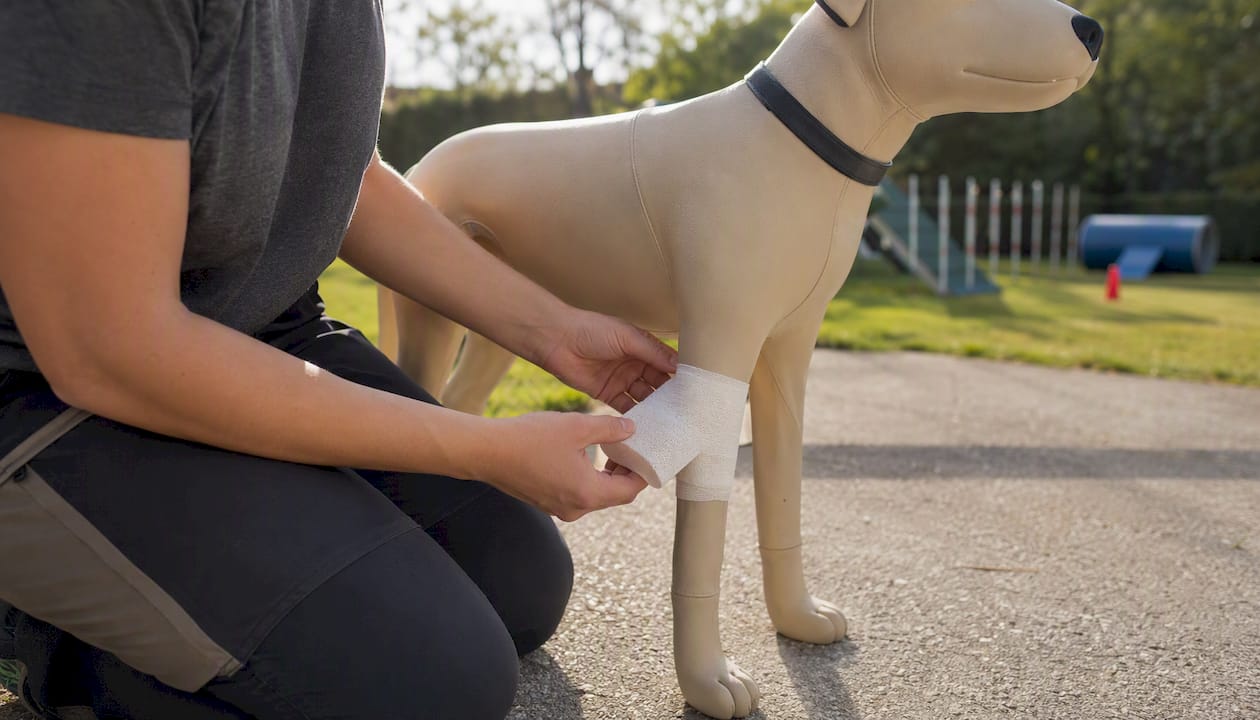
Pet first aid and CPR certification functions as the practical baseline nearly every serious operator adopts, regardless of whether state law requires it. It typically takes a single day to complete and directly addresses the most common on-site emergencies: choking, heatstroke, and injury response before veterinary care arrives.
Beyond first aid, staff working directly in supervised play should understand canine body language well enough to recognize escalating stress or conflict before it becomes a bite incident. This is where CPDT-KA training or IBPSA operational credentials add real value, since both address group management specifically rather than general obedience training.
Building this into your staff training program from day one, rather than treating it as optional professional development, tends to separate facilities that scale smoothly from ones that face a costly incident in year two.
Legal Liabilities Unique to the Daycare Business Model
Dog daycare carries a specific liability profile that differs meaningfully from most small businesses, because your product is direct physical supervision of animals you don’t own, interacting with each other in ways you can’t fully predict.
Bite and injury liability between dogs is the most frequent claim type. A screening process that catches incompatible temperaments before group play reduces this risk more than any amount of insurance coverage, because prevention beats claims response every time.
Escape and property damage liability covers dogs getting loose from your facility, whether through a gate left open or a fence gap nobody flagged. This ties directly back to facility standards like secure fencing height and double-gate entry systems.
Negligent supervision claims arise when an incident occurs during a period where staffing fell below your own stated ratios, which is why your intake documentation and staffing logs matter so much during any legal review. If your own operations manual states a supervision ratio you didn’t maintain that day, that gap becomes the plaintiff’s strongest evidence.
Vaccination and disease liability covers outbreaks of conditions like kennel cough or parvovirus spreading through your facility due to inadequate vaccination verification or isolation protocols. Keep vaccination records current and verified at every intake, not just at initial enrollment.
Risk management here isn’t a single insurance policy. It’s the combination of screening rigor, structured supervision practices, and documentation that lets you demonstrate, after the fact, that you followed your own stated protocols.
Waste Management and Environmental Rules for Pet Facilities
Waste handling sits at the intersection of sanitation regulation and environmental compliance, and it’s an area inspectors check closely because it’s directly visible and directly tied to disease control.
Most jurisdictions expect solid animal waste to be collected promptly from play areas and disposed of through regular trash service, though facilities with larger dog counts sometimes need commercial waste contracts rather than standard municipal pickup. Check whether your local sanitation department classifies animal waste differently from general commercial waste, since some do.
Wastewater from cleaning indoor play areas and kennels raises separate questions. If your facility uses floor drains connected to municipal sewer systems, some local health codes require grease-trap-style interceptors or pretreatment for wash-down water, particularly if you’re using industrial cleaning chemicals at volume. Confirm this with your local water utility or public works department before you finalize your build-out, since retrofitting drainage after the fact is expensive.
Pest control documentation ties into waste management directly, since improperly managed waste is the single biggest driver of pest issues in animal facilities. Keep a signed pest control contract with visit dates logged, since inspectors frequently ask for this alongside your general sanitation schedule.
Where Dog Daycare Regulation Is Headed Next
Ollie’s Law didn’t happen in a vacuum, and it won’t stay contained to Massachusetts. High-profile incidents have a documented pattern of triggering fast legislative response, and once one state builds a model for injury reporting and municipal licensing, other state legislatures tend to look at that model rather than starting from scratch. Operators in states with currently minimal daycare-specific rules should expect that gap to narrow within the next several years, not stay open indefinitely.
I think the operators who’ll handle that shift best are the ones treating voluntary certification and documentation as core infrastructure now, not as a response to a future mandate. Waiting for your state to force injury reporting before you start logging incidents properly puts you in permanent catch-up mode. Building that habit voluntarily, today, means a new law arrives and finds you already compliant instead of scrambling.
The visible veterinary partnership matters more than most new operators realize, too. It’s not just an emergency contingency, it’s a credibility signal that shows up in every inspection, every insurance renewal, and every parent’s decision to trust you with their dog. Facilities that can produce a signed, specific vet agreement on demand read as fundamentally more serious than ones that can only offer a phone number.
The real policy risk isn’t a single new state law. It’s the sheer variability across thousands of municipal codes that were never written with daycare in mind. That variability means flexibility in your operations, not just your paperwork, is what actually protects you. A facility built rigidly around today’s local interpretation may need real retrofitting when a new inspector, a new zoning board member, or a new state statute reads the same activity differently five years from now.
How Thedoggurus Helps You Stay Audit-Ready
Thedoggurus gives you the operational systems that turn scattered compliance work into a repeatable process, instead of a scramble every time an inspector calls. Rather than building your staff training, intake screening, and operations manual from scratch, you get role-specific training modules, playbook templates, and benchmarking tools built specifically for dog daycare, boarding, and pet care operators.
The staff training products cover exactly the kind of role-based learning inspectors and licensing boards want documented: supervision protocols, intake procedures, and the operational habits that keep your team compliant during actual peak hours, not just on paper. Combine that with structured onboarding systems and your certification records stay organized automatically instead of scattered across email threads and sticky notes.
If you’re preparing for an inspection, opening a new location, or simply auditing whether your current operation would survive a surprise visit, start with the pricing plans to see which tier matches where your business is right now.
Key Takeaways: Your First 30, 90, and 180 Days
Compliant dog daycare operation depends on confirming your local zoning classification first, then building facility, staffing, and recordkeeping systems around what state and municipal rules actually require.
| Point | Details |
|---|---|
| Confirm zoning in writing | Get a written interpretation before signing a lease or starting build-out. |
| Separate license types | A business license never substitutes for a kennel or animal-facility permit. |
| Match state examples to your state | Iowa sets exact numbers; Massachusetts sets reporting duties; check your own state’s approach. |
| Build a documented vet partnership | A signed emergency agreement satisfies inspectors far better than a phone number on file. |
| Use Thedoggurus for staff systems | Role-based training modules and operations templates keep certification and supervision records audit-ready. |
Your 30 day priorities: confirm zoning and classification, secure that written interpretation, start your veterinary partnership, and collect intake templates. Your 90 day priorities: complete building and fire inspections, secure any required state facility license, train staff in pet first aid and CPR, and put your screening process into daily practice. Your 180 day priorities: finalize renewal documentation, set a continuing education schedule for staff certifications, and audit your actual staff-to-dog ratios during real peak hours.
Frequently Asked Questions
Does the federal government regulate dog daycares?
Rarely. USDA/APHIS oversight applies mainly to regulated commercial activities like breeding, sales, or interstate transport. A standard daycare supervising off-leash play typically falls under state and local jurisdiction instead.
What’s the first thing I should do before opening a dog daycare?
Request a written zoning determination from your local planning department confirming that your address permits daycare or kennel use under its current classification.
Do all states have dog daycare-specific laws?
No. States like Iowa have detailed administrative rules naming “dog day care” directly, while many states rely entirely on general kennel statutes or municipal codes with no daycare-specific language at all.
What is Ollie’s Law and does it apply outside Massachusetts?
Ollie’s Law is a 2024 Massachusetts statute requiring municipal licensing of kennels and daycares and mandatory injury reporting. It only applies in Massachusetts, but similar laws could follow in other states.
Are certifications like CCPDT or IBPSA legally required?
No state currently mandates these credentials for daycare staff. They function as voluntary trust signals that reduce liability risk and reassure both regulators and customers where state rules are minimal.
What insurance does a dog daycare actually need?
At minimum, general liability and care, custody, and control coverage, plus workers’ compensation once you employ staff. Professional liability coverage is also strongly recommended given the supervision-related claims common in this industry.
This article is general information, not a substitute for advice from a qualified lawyer. Consult a qualified legal professional about your own circumstances before acting on anything here.
Sources
- Mass
- 21—67.11 (162) Dog day care. — Iowa Administrative Code
- Iowa Admin. Code r. 21-67.8 – Dog day cares | State Regulations
- Minimum space requirements for dogs — APHIS (USDA)
- California legislative information — Health and Safety Code (search entry)
Recommended
- The Two Most Important Factors to Operating a Safe Dog Daycare – The Dog Gurus
- Dog Boarding Facility Requirements: The Complete U.S. Guide – The Dog Gurus
- Ensuring Safe and Joyful Play: Dog Daycare Group Play Safety Standards – The Dog Gurus
- How to Safely Evaluate Dogs for Doggie Daycare – The Dog Gurus