

Starting a dog business comes down to five moves: pick your model, get legal, set up operations, price for profit, and build your client base. You don’t need a massive budget to get started. What you do need is a clear plan before you spend a dollar. Here’s the fast version:
- Choose your niche (grooming, boarding, training, walking, or daycare) based on your budget and lifestyle
- Register your business as an LLC or sole proprietorship and get your EIN from the IRS
- Secure general liability insurance before you take your first client
- Research local demand by checking competitor pricing and identifying gaps in your market
- Lock in your first three clients before investing in equipment or signing a lease
That sequence protects you from the most common mistake: spending big before you’ve validated demand.
Table of Contents
- How to start a dog business: choosing your model and legal setup
- What does it take to run safe, efficient daily operations?
- How do you grow revenue beyond your first few clients?
- What do industry experts say about building a thriving dog business?
- How do partnerships and networking grow your dog business?
- Thedoggurus gives you the systems to grow faster
- Key Takeaways
How to start a dog business: choosing your model and legal setup
The model you choose shapes everything, from your daily schedule to your startup costs. These five niches are fundamentally different businesses.
Dog grooming (mobile or shop) costs $15,000–$80,000 to launch, with net margins of 25%–55%. Mobile grooming is the fastest-growing segment because there’s no rent and you work from a fully equipped van. Shop grooming requires zoning approval and a buildout, but you can serve more dogs per day. Dog boarding demands the most capital, $50,000–$200,000, plus zoning approvals, kennel licenses, HVAC, drainage, fire suppression, and months of inspections before you open. Dog training has the best economics of any niche. Startup costs are minimal, margins run 60%–80%, and a CPDT-KA certification adds real credibility. Dog walking and pet sitting are the lowest-barrier entry points, with startup costs under $1,000 covering insurance, a business license, and marketing.
Once you’ve chosen your model, get legal:
- Business structure: An LLC separates your personal assets from business liability. A sole proprietorship is simpler but offers no protection if a dog bites someone.
- EIN: Apply free at IRS.gov. You need it to open a business bank account and hire staff.
- Licenses and permits: Requirements vary by state and city. Boarding facilities need kennel licenses; grooming shops may need health department compliance and wastewater permits.
- Insurance: General liability insurance typically costs about $30–$100 per month and is essential before starting, covering risks like dog bites, escapes, and property damage.
Write a business plan that covers your startup costs, monthly expenses, revenue targets, and break-even timeline. Most facility-based businesses take 12–18 months to reach consistent profitability. Walking and sitting businesses can turn a profit much faster.
What does it take to run safe, efficient daily operations?
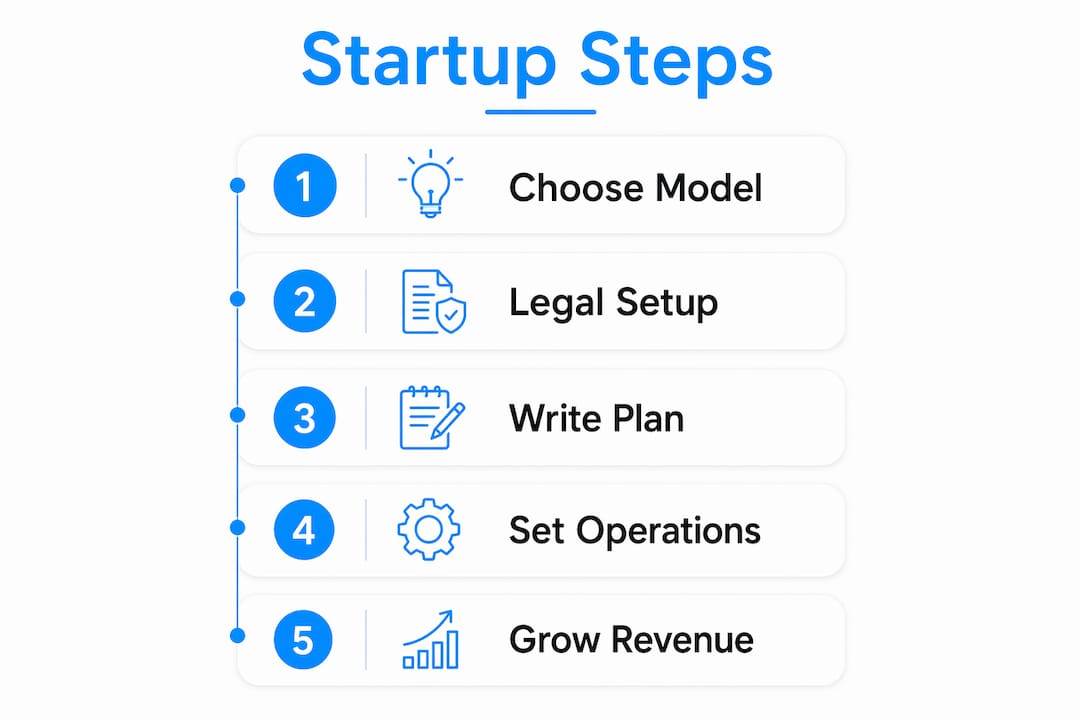
Operations are where most new dog business owners underestimate the work. Getting this right early protects your clients, your staff, and your reputation.
Meet-and-greet protocols are non-negotiable. Assessing dog temperament before intake reduces aggression incidents and limits your liability. Never skip this step, even for returning clients with a new dog.

For staffing, background checks and reference collection are the baseline. Collecting references and providing thorough training reduces liability and builds client trust faster than any marketing campaign. Assign clear roles from day one so staff know exactly what they own.
Your SOPs should cover:
- Safety procedures: Emergency protocols, dog separation plans, and bite response
- Cleaning standards: Sanitation schedules for kennels, grooming areas, and common spaces
- Client communication: How and when updates are sent, and who handles complaints
Technology makes all of this manageable as you grow. Scheduling software built for dog walking includes GPS tracking, route planning, and client messaging that keeps walkers’ personal contact info private. A CRM handles appointment history, vaccination records, and billing in one place.
Pro Tip: Document every SOP before you hire your first employee. A written process is the only thing that scales. If it lives only in your head, your business is fragile.
For deeper guidance on building a training program your staff will actually follow, Thedoggurus covers staff training best practices built specifically for pet care businesses.
How do you grow revenue beyond your first few clients?
Tiered service packages are the fastest way to increase revenue per visit without adding more clients. A grooming menu that runs from a basic bath to a full spa day (nail grinding, gland expression, conditioning treatment) gives clients a reason to spend more and stay loyal. Offering packages from basic wash to spa day is a proven growth lever in grooming and boarding alike.
Subscription models work especially well for walking and grooming. A 10-walk package at a slight discount locks in recurring revenue and reduces client churn. A “groom every six weeks” subscription keeps your calendar full and your clients on schedule.
Marketing doesn’t need to be complicated at the start:
- Google Business Profile: Set it up before you open. Reviews here drive more local bookings than almost any other channel.
- Social media: Photos and short videos of dogs in your care build trust fast. Show your facility, your team, and your process.
- Referral programs: Offer existing clients a discount for every new client they send. Word of mouth is still the most cost-effective acquisition channel in pet services.
- Local SEO: A veterinary SEO approach that targets neighborhood-level search terms applies directly to dog service businesses competing for local visibility.
Scaling beyond solo operations requires formalizing your processes and adopting technology before you need it. Hire your first employee when client volume consistently exceeds what you can handle alone, not after you’re already overwhelmed.
What do industry experts say about building a thriving dog business?
The operators who build profitable, lasting dog businesses share a few habits that separate them from those who burn out in year two.
Team management is the leverage point. You can only serve so many dogs yourself. The business grows when your staff can deliver the same quality you would. That requires clear onboarding, written SOPs, and ongoing coaching, not just a one-time orientation. Thedoggurus’ hiring guidance for pet businesses covers exactly how to find and keep people who raise your standards.
AI-powered tools are changing how owners manage their time. Platforms that combine scheduling, client communication, and performance tracking reduce the daily firefighting that keeps owners stuck in operations instead of growing the business. Thedoggurus uses AI-powered learning tools that act as a 24/7 accountability partner for owners and staff alike.
Common pitfalls from industry veterans:
- Underpricing at launch attracts price-sensitive clients who are the hardest to retain
- Skipping the meet-and-greet creates safety incidents that damage your reputation fast
- Hiring without a training system means every new employee is a liability until they figure things out on their own
Pro Tip: Customer experience and play safety are your two biggest reputation drivers. One preventable incident can undo months of five-star reviews. Build your safety protocols before you need them.
How do partnerships and networking grow your dog business?
The pet industry runs on referrals. Veterinarians, groomers, trainers, boarding facilities, and pet supply stores all serve overlapping client bases, and the right relationships send a steady stream of new clients your way without paid advertising.
Start with your local veterinary clinics. Vets field questions about grooming, boarding, and training constantly. A relationship with even one practice can generate consistent referrals. Drop off business cards, introduce yourself, and make it easy for their staff to recommend you.
Pet supply stores and shelters are equally valuable. Shelters in particular connect you with new dog owners who need exactly the services you offer. Offer to host a free training demo or sponsor an adoption event. The goodwill pays back in referrals for months.
Online, join local pet owner Facebook groups and neighborhood apps like Nextdoor. Engage genuinely, answer questions, and let your expertise speak before you promote your services. Industry associations and local business groups also open doors to cross-promotion opportunities with complementary businesses.
Thedoggurus gives you the systems to grow faster
Running a dog business is rewarding. Running one profitably, with a great team and happy clients, takes more than passion. It takes proven systems.
Thedoggurus is the platform built for exactly this. Founded by pet care industry pioneers who have built and run these businesses themselves, Thedoggurus combines expert-led courses, hands-on coaching, and AI-powered tools in one place. Whether you’re launching a dog daycare, building out your grooming operation, or scaling a training business, the platform gives you the SOPs, staff training modules, financial tools, and leadership development you need to grow without the guesswork. The AI-powered learning platform works around the clock so your team keeps improving even when you’re not in the room. Visit Thedoggurus to explore plans and see how other pet care owners are building businesses they love.
Key Takeaways
Starting a dog business requires the right model, legal setup, safety protocols, and growth systems working together from day one.
| Point | Details |
|---|---|
| Choose your model carefully | Startup costs range from under $1,000 for dog walking to $15,000–$80,000 for grooming, and $50,000–$200,000 for boarding facilities. |
| Get legal before day one | Register your business, get an EIN, and secure general liability insurance before your first client. |
| Safety protocols protect everything | Meet-and-greet assessments before intake reduce aggression risk and limit your legal liability. |
| Tiered packages drive revenue growth | Service menus from basic to premium increase spend per visit and improve client retention. |
| Thedoggurus accelerates your path | Expert courses, AI-powered tools, and coaching help pet care owners launch, staff, and scale faster. |